Mar 22, 2013

looking for 421s...

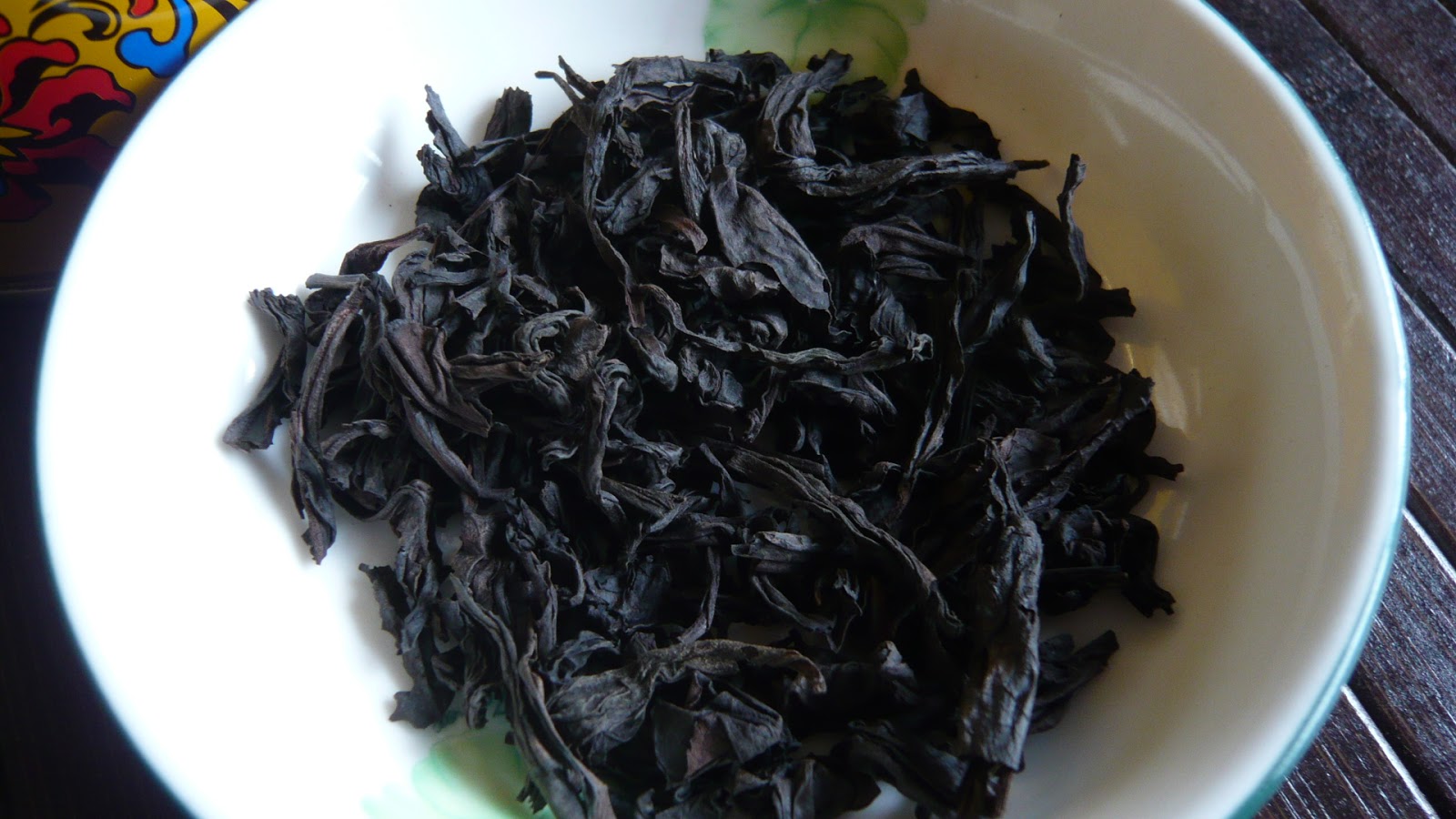
I generally don't have too much passion for shu puerh. But this CNNP 2002 "golden brick" is one of my favorite so far. My other favorite is the "spouse" of a favorite sheng of mine from Yi Ru Chang. But this CNNP 2002 is more classic and has experienced more examination throughout time. So I would give it more credit.

This brick was compressed in recent years with 2002 stock of 421s. This is where I learned of 421s, a discontinued CNNP product - and I don't get it why CNNP would discontinue such a good product while it's producing so many mediocre teas. Now I'm looking for 421s, because this brick went out of stock from my supplier.

On one hand, the name of 421s is not very well-known nowadays among consumers. On the other hand, some boutique producers (such as the famous or infamous Changtai) made their own "421" products, which more or less reflected their admiration to this tea. But none of them is the same as 421s, and almost all of them are a lot more expensive than 421s - because they are boutique teas, I guess...

Similar to other more commonly seen mark numbers of big factories such as 7542, 8972 etc., 421s is a mark number. "s" represent "shu"; "1" represent Kunming Factory, the "home" factory of CNNP. "4" and "2" indicate this tea is a blend of grade 4 to grade 2 leaves, generally quite high grades for puerh tea. Some say "1" indicates there is first grade tea blended in too. I don't know which saying is more accurate, but think that's possible too, because another loose shu, Y562, is from Kunming Factory too, yet it doesn't end with "1". Some say "4" represents a formula number. Some say "4" represents the tea was invented in 1974. And even the older CNNP people have different sayings about this mark number. I believe the saying of "grade 4 to grade 2 leaves blended" is closer to truth, because this tea is a blend, not a purely grade 2 tea. But it's highly possible that this tea was invented around 1974, and many people believe it was THE first shu ever. Yet CNNP chose to discontinue this tea... I can't think of a logic reason for that!

The package is nothing special. The "golden brick" in its name indicates it has a lot of golden buds. 


Many golden buds...


First of all, this tea satisfies my basic requirement from a shu - not stinky. (Don't laugh at my low standards... it's not always easy for me to find shu that's not stinky at all by my senses...) Furthermore, it has layers of flavors and nice aftertastes that are rarely seen from shu puerh. To some degree, this tea changed my view of shu (but still, I'm generally not so excited about shu...)

I got this tea in 2009, and was told it was made of 421s. That's the first time I experienced 421s. Shortly after, in a conversation with a highly-experienced tea professional who had quite a few years of work experience in CNNP, he said, "You kids just don't know about many good products from the old days of big factories... For example, teas like 421, 671 and 562, people don't even talk much about them these days!" He shared with us some 421 and 671 from his own storage, which was quite an eye-opening experience. That was my second encounter with 421.

There are many puerh professionals who firmly believe shu made of higher grade leaves would have better long-term outcome, while products made of lower grade leaves (such as the classic 7581) could also be great but more suitable for sooner consumption. I don't have enough experience in shu to judge this opinion. But since 421, I'm very willing to believe this claim. A few years ago, I read from a Shi Kunmu article that he found a 7262 (another shu with relatively higher grade leaves) dry-stored in Malaysia had a wonderful taste that almost resembled taste of old sheng. I thought this was a very impressive comment on a good shu. Although shu was invented to mimic old sheng, rarely anybody, whether enjoying shu or not, would think the taste of shu could be comparable to old sheng. In my value system, if a shu could be compared to an old sheng, then it has probably reached the highest state of shu. I like 7262 very well too, but don't yet have such wonderful experience as Shi Kunmu's. But since 421, I'm very willing to believe Shi Kunmu's description on his experience of dry-aged 7262 is quite fair.

Probably it's because I'm getting older now, with a weaker body system that demands milder tea... I've been drinking slightly more shu than a few years ago. I will soon write about another shu that I think interesting - and that one, I guess many people, including people who don't usually drink shu, will find it interesting :-D

Mar 16, 2013

tea for drinking and tea for collection

Extra notes: Just because a tea has a wrapper that looks the same as this one, it does NOT necessarily mean it is the same tea. Due to the chaotic system of CNNP, I myself have quite a few teas of this same wrapper (such as the two mentioned here) and I'm sure you would see many more out there. They could be completely different.

__________________________________

Here, "collection" specifically refers to the investment kind of collection. Ideally, we would like to have puerh that's both tasty for drinking and of collection value - not that each drinker plans to sell it in the future, but it doesn't hurt if it could be exchanged for cash at ay time in the future. I guess most drinkers take puerh for drinking and not for collection. I also believe it's not practical for most tea drinkers to take puerh as an investment, which I will explain later in this post. 

I should also mention that I'm not a puerh collector and don't plan to be one, because, it's too much work... to be a collector, you've got to be an expert of the tea, the storage, market prediction, investment mentality... all of these fields! So the points about tea collection discussed here stay at a very basic level.

The conversation about tea for drinking and tea for collection was triggered by a question from a tea friend. Recently a tea friend asked me that besides the supplier's information, if there is something in the tea package of my 1998 7542 that indicates it's from Menghai Factory and not any other CNNP factory. I've got quite a few similar questions in the past, and have to admit that I didn't bother to answer each of them, especially on online tea forums. You can't possibly attend to every question, and I would always give priority to more personal communications.

Now back to my friend's question, is there something in the tea package that indicates the origin of the tea? Actually there isn't much, and that's basically why this 1998 tea is less expensive than most pre-2005 Dayi sheng with Dayi trademark.

However, indeed there are small marks here and there showing the origin of this tea. I don't think my supplier determined this tea is 7542 just by tasting and leaf anatomy - I don't believe 7542 has the so-called consistent anatomy throughout years, and my supplier is not one of those fairy men who can taste-distinguish everything. Generally speaking, CNNP had a lot of products from different factories of similar packaging, as described in an earlier blog post here. One of the tea showed in that post is his 7542, and another one with almost identical wrapper is something completely different. For many of these products, the only way to separate one from another from the outlook is not by the tea packaging itself, but by the packaging of tongs and big boxes (or bamboo buckets). This tea has a "big ticket" (ticket for each big box of jian, or 42 tea cakes) of Menghai Factory, which I didn't get. By the time I put my hands on this tea, there wasn't a whole box for me. The bamboo tong also has a 7542 stamp on it, which I took a photo to send to my friend. For those of you who have been wondering it, you've got to forgive me for not showing the photo earlier. I really don't think a photo of a stamp means a whole lot. I could easily visualize an artist friend of mine could carve an identical stamp out of a potato with a kitchen knife ;-) For the same reason, I didn't bother to save a photo of the jian ticket from the supplier - that cheap-looking printing from state-owned era... one could make a much "authentic-looking" one if one really means to fake one.

Then why would I trust that my supplier didn't fake his jian ticket and didn't stamp every tong with a potato stamp? To me it wasn't a hard judgment. First of all I've known this supplier for years and got some nice teas from him. Secondly, just by common sense, he didn't sell this tea for any price more than a good dry-stored 10-year-old sheng that doesn't have a 7542 title. Basically, this tea is mostly sold to people who buy tea to drink, and not tea collectors, because savvy collectors of Dayi puerh would take tea with well-documented packaging and/or trademarks only.

So this tea, and a bunch of other pre-2000 CNNP teas, are examples that demonstrate the difference between tea for drinking and tea for collection. Last year, in my conversation with an experienced puerh collector, he pointed out another consideration that tea collectors may want to keep in mind.

For large factory teas with mark numbers, such as 7542, 7262, etc., this experienced collector suggested to choose the first batch of a year (such as 801 from 2008) over a later batch of a year (such as 808 from 2008). At the beginning, I was a little confused, "aren't 801 batch and 808 batch supposed to be pretty much the same?" He said, "technically speaking, they are either same or almost same." Then I was even more confused and wondered why one would choose 801 over 808 then. He explained to me that, for collectors, they have to consider that 10 or 20 years down the road. Most people in the next generation may not have a clue how many batches were issued back in 2009, 2008, 2007... Then everybody will know there is the first batch each year (such as 901) but can't be sure if an eighth batch was even issued in a specific year. Then you can probably imagine, even if you get some good 7542 808, 20 years down the road, some tea expert would say, "hmm... I'm pretty sure there wasn't a 808 batch in that year. So this tea can't be authentic!" An expert's thought of whether a batch was really issued in a specific tea would be a legitimate concern. The problem is many puerh experts would be very sure of things that they shouldn't be sure of, and 20 years down the road, most puerh drinkers and collectors might be quite clueless of such kind of trivial and could only turn to their puerh experts for decisions. You can also imagine that soon after the experts' comment on the batch number, there would probably be some semi-experts commenting that even without the factor of the batch number, just the leaves of the tea don't look right... None of this will affect your tea for drinking. But if you've collected the tea as an investment, then you may have some trouble dealing with the market perspectives of your tea.

What my friend said may also somewhat explain why in recent years, the first batch of many Dayi new products are slightly more expensive than latter batches of the same product in the retail market.

And why I don't believe it's practical for most tea drinkers to take puerh as investment - it's about investment only, and none of this should discourage people from collection for their own future drinking:

1. It's estimated that more than 80% puerh in storage is ruined in storage, sooner or later. There is no real data behind it, but it sounds reasonable. Twenty years of successful storage plus one accident is equivalent to a complete failure. Accident happens and we can't win every battle in peurh storage. But usually one can afford losing a few battles. It would be a much bigger heartache though (and hole on saving account), if it's part of a big investment.

2. Many puerh professionals believe professional level storage requires tea to be stored in whole big boxes (jian) and there should be many boxes of tea stored together. This is usually hard to achieve for most individual tea drinkers. There are some theories about whole boxes make tea storage better. It's hard to test them though. For example, would it really deviate from the "gold standard" if you store 42 cakes of various sheng in a box rather than storing an original jian of 42 same cakes? But in reality, indeed, whole boxes of tea are more liquidable than scattered tongs or cakes. Collecting whole boxes of tea is not practical to most tea drinkers and is somewhat restricted to people with more disposable incomes.

It would be a different topic about storing tea for personal drinking in the years to come. There have been many good discussions on strategies of family tea storage, and some very elegant examples of "pumidor" like this one. For people who don't have much isolated space to store tea, and for people like me who are too clumsy to build anything, here is one tip I got from a puerh professional. He said, "if you have a tiny storage room on the first floor of your house under the staircase, it might be perfect for tea storage." This guy runs large puerh storage warehouses in both Guangzhou and Kunming (both dry storage). He doesn't need to store a lot of tea at home. But I have to say, in any given space, he is fast at recognizing corners suitable for tea storage!

Mar 9, 2013

bundled readings

Saw this online, and this exactly suits my day. I'm supposed to catch a deadline of something else, as well as working on a few past-due tasks... yet I have been idling with tea stuff :-p

Here are a few readings that I've found very interesting. Most of them are not about tea at all. But somehow I've found them making excellent bundled readings with some popular tea discussions nowadays.


1. Here is a MIT funded randomized clinical trial that was not about any drug, but about placebos! The original article is on JAMA, one of the most influential medical sciences magazines. Interested geeks could found it on PubMed.

Basically, this trial shows that people who took the $2.5 placebo reported better pain-killing outcome than people who took the 10 cents placebo. I'm sure everyone of you could relate this to some tea conversations, or wine, or coffee... ;-)

2. Here is a NY Times article about tea culture in a North German town. I learned of it from a teatra.d discussion and from @babelcarp on twitter. It's a very interesting and beautifully written article. I guess different people would have different takes from this article. What impresses me about this article is how one can always find new experience in tea that goes beyond one's current value system. Many people may have in mind what "is tea" and what "isn't tea", what could be put in tea and what shouldn't be put in tea, what is the "hardcore" style of tea drinking and what is the clueless style. But we all have good chances to find out all these value systems are relative and even wrong.

3. Keith Chen: Could your language affect your ability to save money?
A very interesting 15min. talk giving by Yale Univ. behavioral economist Keith Chen. I'm sure you will enjoy it - it's not only very interesting, it's also about money :-p
The question posed is very novel, and the quantitative evidence behind it is quite convincing.


This has nothing to do with tea. But it's interesting to ponder on the fact that we are being influenced by things in our live that we are barely aware of.

Probably we can see in many examples how language can also affect our tea appreciation and how we approach tea culture. What Keith Chen talks about family vocabulary earlier in this video is very interesting - the word "uncle" in English can be translated to several different words in Chinese, depending on who it refers to, whether he is uncle from your father's family, from your mother's family, older than your father, younger than your father and how much DNA you share with him! It's not hard to imagine that this kind of vocabulary system can plant family lineage values in one's mind more easily than English. And I guess this has something to do with the degree of respect or even worship to one's teacher in Asian culture (in traditional Chinese culture, a teacher respected as much as a father, and a father is the most respected member of the smallest unit of a family). So, although this talk wasn't about tea at all, it reminds me of quite a few discussions between Asian tea drinker who referred to their tea teachers for "truth" and western tea drinkers who challenged it.

Another language question I have been thinking of, is what I mentioned in a teachat discussion:

I always have this question in mind, "what's a tea master?" Is "master" an English language thing that I have difficulty understanding or is "tea master" a phenomenon in tea world? Generally I understand a tea master is somebody who is very knowledgeable about tea. But I'm not sure what's the definition of tea master and what's not (unless it's a Japanese chanoyo tea master title, which has professional certification, or a Master's degree which has academic accreditation). I've met a bunch of tea scientists who study on growing tea and biochemical research of tea, and exceptional tea workers whose skills are at the rim of extinction, and very devoted and brilliant tea producers, tea scholars, tea historians and tea educators. Rarely I heard any of them being called "tea master". I feel it's probably because the Chinese word equivalent of "master" (maestro? 大师?) would be either very serious that's reserved for people like Confucius, or would be used in rather sarcastic way. 

Somehow, the word "master" makes me visualize an early 20th century British primary school teacher whipping his students :-p Is this the influence of language?

Mar 2, 2013

a tea accidentally made

This is a Meng Shan Mao Feng (蒙山毛峰) produced in last spring in Meng Mountain (home of Meng Ding Yellow Bud, and many other great teas) of Sichuan province.

I enjoyed this tea very much and thought I had taken some photos of it, but couldn't find any. The photo here is producer's photo, which actually would be much better than mine anyway.

Among all the green teas I like, the enjoyment level of this tea is probably in the mid-range, and its price is in the low-range. Although not one of the most impressive teas in my collection, this is another very unique teas. So I thought I would be remiss if I weren't to give it at least a brief documentation.

Meng Shan Mao Feng is produced every year. But I say this tea is very unique because Meng Shan Mao Feng of this quality wouldn't be seen very often. It was an accidentally made tea! And you know I love accidentally made tea :-) Last year, during the harvest season, the weather was very sunny and warm, which was great! Then, tea farmers found they could hardly catch up with the harvest for Meng Ding Honey Dew (蒙顶甘露), another Meng Shan green tea made of the earliest leaf buds in Meng Mountain.

It was a great harvest season, and the production of Meng Ding Honey Dew was great anyway. But it was a pity that a lot of leaf buds that could potentially be made into this high grade tea grew larger than required size before farmers had time to put their hands on it. By any chance if you have wondered how this could happen - how come in the 21st Century, the harvest speed couldn't catch up with the growing speed of leaf buds -  here is why. Meng Mountain, as its name indicates, is a very mountainous region. All harvest workers must walk up and down to pick tea leaves (this is pretty much true in most traditional tea growing areas in various countries, as the mountainous regions are naturally the best for tea). And, of course, for most green teas (not just high grade ones, but most ok grades), the harvest is leaf by leaf, bud by bud, completely manually.

Last spring, I made a purchase list for green teas, and ended up buying a lot more, because there were good teas put in my hands from time to time :-) This was one of them, and the producer told me, this tea was one day too old to be made into Meng Ding Honey Dew, and therefore this tea became a Meng Shan Mao Feng, an intrinsically inexpensive tea, but the highest grade of Meng Shan Mao Feng the producer himself had ever seen.

I think this tea is unique not only because it was accidentally made due to the weather. It's also because of its producer. Frankly speaking, if this tea appears in the market as Meng Ding Honey Dew, the highest grade tea, I would think the tea buds look a bit large, but wouldn't really blame the producer for it, as it's really only a little larger than what it should be. But this producer (who is also the producer of the Tibetan Hei Cha and Meng Ding Yellow Bud I've got in the past years) is what I call a serious producer. Whatever tea he makes, he literally holds "National Standards" (tea standards from State-Owned era, with nice and thorough description of quality requirements, but aren't enforced in private sectors of tea industry) in one hand, and other ancient or modern tea literature in the other hand. If the tea is a bit larger than required, he wouldn't call it Meng Ding Honey Dew. He would call it a Mao Feng, and proudly present it as the best Mao Feng. This is no less pride than what he would have in the best Honey Dew he makes.

In my experience dealing with tea producers, what tells a lot about a producer is not just the best tea they make, but more importantly, how they handle their lower-priced tea and what quality their low-priced tea holds. Some of my most expensive teas and least expensive teas are from the same producers. I often find interesting contrast between the teas, and consistent attitude of tea producers carried by these teas.

I don't have many photos of Meng Ding Honey Dew in hands. But the base tea of this Meng Ding Snow Orchid is quite similar to it. And there is one photo in this post. The tea is very fuzzy, and looks somewhat similar to Bi Luo Chun, for which I have a few not so clear photos in this post. A market phenomenon in recent years is, Sichuan green tea is used a lot to make fake Bi Luo Chun. In order to fake Bi Luo Chun, the tea buds must be of very high grade to begin with, and some of these tea buds could have been made into high grade Meng Ding Honey Dew, which is also great but has much lower market price than Bi Luo Chun. But the best Sichuan tea producers wouldn't get involved in the shady business. This is not only because they are too proud to fake anything, but also because they truly believe Sichuan tea tastes much better than Bi Luo Chun - I'm sure not all tea drinkers would agree on this, but it's not entirely unreasonable. Sichuan green teas generally have more explicit flavors than southeastern green teas, and would be enjoyed a lot more by tea drinkers with heavier tastes.

A couple of other accidentally made teas that I wrote about in the past:
The famous bug-bitten Oriental Beauty
The Red Dan Cong - There wasn't much of Red Dan Cong in 2010 yet. But last year, I saw quite a few Red Dan Cong products in the market. So probably this is becoming a trend!

Besides, the wild oolong that I enjoy very much basically started from the year when many other teas were ruined in the tree and the tea shifu was bored of doing nothing but waiting for the new harvest.

This is the spirit of "when life gives you lemons, make lemonade!"

Feb 23, 2013

blog statistics...

Believe it or not, I've observed that including a photo in the blog, no matter what photo it is, helps encourage people to click into your blog :-p
This morning, from the statistics of this blog, I found that the blog had 99,987 page views. So I tweeted on twitter, "oh my! my blog is 13 clicks away from 10,000 page view. maybe you want to be the 10,000th click?!" (And I just realize it at this moment that I put the number wrong!) Then I went to brush my teeth. And during my teeth brushing time, my blog got 30 something page views and surpassed the 100k threshold. It was quite amazing because I know I'm not the most popular tweeter, and I don't have a huge number of followers and I was thrilled that people did pay attention to what I said :-)

The blogspot report doesn't include statistics from my mirror blog site at teatra.de, lifeinteacup.teatra.de, where there are often lively conversations. I think teatra.de is a wonderful creation which sums up functions similar to twitter, facebook, blogs and online forum just for tea drinkers! But I wonder if anybody could tell me how to get blog statistics on teatra.de (which basically uses wordpress platform). I vaguely remember wordpress does have a statistics tracking system. But it took me a while to notice the statistics tracker of blogspot and I just can't find the statistics tracker on teatra.de or wordpress.

In other aspects, I do like wordpress platform much better than blogspot (which seems even retrogressing all these months...). I keep this blogspot blog site mainly because I'm too lazy to move, and according to Alex Zorach of ratetea.com,  it's important to keep the same URL scheme. But then, to my curiosity, Alex moved his own blog site, which generated great difficulty for me to locate his newest writings, as I love reading his articles and he wrote on quite a few different themes that I'm interested in. So, I would love to hear from Alex and others about their opinions on keeping consistent URL.

From time to time, I see discussions about how to promote popularity of a blog, and how a blogger would feel when there are too few readers or comments. There are quite a few interesting discussions on teatra.de, such as this one. And there is an analytical writing on Alex Zorach's old tea blog here (and some of the comments are quite interesting too). To me, as a blogger, having some enthusiastic readers is a lot more important than just having tons of readers. Similarly, in my life, I feel having some engaging friends is more important than just having tons of friends. And for business, I feel having some returning customers is more important than just having lots of new customers day in and day out. But on the other hand, we would all love to see more and more enthusiastic blog readers, or engaging friends, or returning customers, right?!

So in terms of blog traffic, here are a few more interesting things that I've observed from blog statistics.
1. The three sites that induced most traffic to my blog, are blog sites of three peer tea drinkers.
Matt Cha's blog:
http://mattchasblog.blogspot.com/

Black Dragon Tea Bar (by Brett, who is also a co-founder of Phoenix Tea)

(I remember Ken also mentioned in his blog that Matt Cha's blog and Brett's blog are two of the biggest traffic inducing sites for his blog.)

Pots and Tea (by Petr Novak, whose name, interestingly, is also one of the most googled words that lead readers to my blog, as described in an earlier blog here.)
http://potsandtea.blogspot.com/

I think this means these three people are really popular in tea world - their sites inducing a lot of traffic, that means there are a lot of people hitting their sites to begin with, which means they write diligently, and people like them.

So, for tea bloggers who are concerned of promoting visibility of their blog sites, my advice is, make friends with them ;-)

2. Interestingly, among the top 10 traffic source sites for my blog, there are another two blog sites that are not updated as the above-mentioned top 3 traffic sources.

Tea Goober (by Bret)
http://teadork.blogspot.com/

Sharing My Tea Stories (by Rich)
http://www.myteastories.com/

Currently, these two blogs are not updated as often as they used to be. But in spite of that, they obviously still attract many readers. So again, for tea bloggers who are concerned of promoting visibility of their blog sites, my advice is, make friends with them and talk them into writing more ;-)

3. Besides the above mentioned tea blogs, I'm thankful to all blog sites that include my blog in their blog list. If I go over blogspot statistics of a specific month or week, I could see a broad range of blog sites that lead traffic to my blog. Traffic and page views are just numbers. More importantly, all the peer bloggers make me feel I'm in a community!

4. Twitter and other social network sites.
As mentioned at the beginning of this blog, twitter could be quite powerful. Twitter is the 7th largest traffic source of my blog, and I'm not even an active tweeter (probably fewer than 100 tweets in the past year). Besides, it seems that not all twitter-driven traffic is tracked by the blogspot statistics. So twitter might be a more powerful traffic source than I had observed.

I don't know how to track traffic from facebook. I don't even visit Life in Teacup facebook page very often. But it seems that it does induce traffic from time to time, and one could do much better job with facebook traffic induction that what I did.

5.  Online tea communities. I've got a list of websites of 11 English online tea communities (on the top right of this blog page). I guess it's not a coincidence that the three sites I visit most often (Tea Trade, TeaChat, and Steepster) are also the three tea forum sites  that introduce most traffic to my blog.

Tea Trade
teatra.de

As mentioned earlier, the traffic statistics from Tea Trade is not included in the blogspot statistics and I don't know yet where to find it. But I know it has led a lot of devoted tea drinkers to my blog, and it causes many interesting conversations. I've told a few new tea bloggers this - if you are still worried about your nicely written blog being under-read, try creating a blog (or a mirror site of your blog) on teatra.de. You won't feel lonely if you hang out where many other tea bloggers hang out!

Steepster
steepster.com

Based on blogspot statistics, Steepster is the top tea forum site that leads traffic to my blog, and the 7th largest traffic source site to my blog. But overall, to my observation, traffic from tea forums is generally spontaneous, and not as consistent as traffic from peer blog sites. But anyway, Steepster seems to be the largest English tea forum so far, and the traffic on that site makes it a potentially powerful traffic source to your blog. Generally I would avoid doing too much self-citation on tea forums. But curious bloggers may experiment on giving a link of your blog post (that's relevant to a discussion topic going on) in a steepster discussion and see what happens. My impression is, steepsterites are quite responsive to newly posted links.

TeaChat
teachat.com

To my observation, different tea forums have quite different styles. TeaChat is one of the most unique English language tea forums that have nice combination of size and enthusiasm (although it's much smaller than steepster, I would rank its enthusiasm level, or maybe in another word, connoisseurship? much higher). Unlike steepsterites, who are generally very responsive to newly posted links, teachatters seem to be more responsive to certain discussion topics. If the topic is interesting to them, the attention would last for quite a while. If there is mystery or controversy involved, the attention would last for a long, long time :-D I have to clarify that I have never intentionally created debates to stir up blog traffic, but my blog traffic seems to unexpectedly benefit from some hot discussions on TeaChat.  

Besides the above-mentioned online forums, I have to mention this Russian forum that's very interesting to me.
http://forum.ixbt.com/topic.cgi?id=80:149
I don't read Russian and I don't know what people there talk about most of the time. This site is not one of the "all time" top 10  traffic source sites for my blog, but in the past one month, it's the number 1 traffic source sites for my blog, and the same thing happened in some past months too. This doesn't necessary mean there is something so interesting on my blog - hey maybe I wrote something stupid that everybody took a look and laughed at :-p But this definitely demonstrates that this is a hot hub of Russian tea drinkers, and it looks like there are lots of them! No wonder once I read in a report that China aims at developing green tea and puerh market in Russia and see it as one of the potentially biggest international market. The rest of us can't do much at this Russian website, but if you are a Russian speaker, you've got to go there and take a look!  
:-D

Feb 16, 2013

Lan Cang Ancient Tea Honey Aroma 2006

This tea was produced in 2006 and released in 2011. At that time, it was rather uncommon for large tea factories to release teas that was produced years ago. Usually large factories sell new tea. But since then, there seem to be more and more young-aged-teas released by large factories. Why is that? I think the following factors play a role (and there might be more factors...):

1. Many factories have unsold teas during the chaos from late 2007 to 2008, and if they could (financially manage it,) they would rather hold the tea till market got better. And the market got better after 2009.

2. Sometimes a tea doesn't taste good at certain stage, and a savvy manufacture would wait till it taste better and then released it to market. This rarely happened a decade ago, when many puerh drinkers in mainland China drank new tea only. But now it makes more sense to both manufacture and tea drinker to have young-aged-tea released.

3. In the puerh world, people are telling each other, "the older, the better..." But a lot of young teas are not that palatable. Then sometimes when you buy a new tea, you would feel you are buying a promise, which may or may not be fulfilled. Therefore, selling young-aged-tea is one way for a manufacture to demonstrate its quality.

4. Somehow, with the rapid increase of tea prices for both raw materials and compressed products, in recent years, very often, young-aged-teas are not much more expensive than new teas (ironically...). So some manufactures would choose to use their storage more and buy less new harvest, and some tea drinkers would choose to buy some aged tea instead of new tea.

The tea overall looks quite young. Although I got it from a Guangzhou dealer, I would assume the tea was stored in Yunnan before its release.


It tastes quite young and you would need to be careful brewing it in order to get the aroma without too much bitterness and astringency. But the tea has started to taste interesting - by interesting, I mean, it's not as "straightforward" as new tea. Its aroma seems to change in your mouth and circulate in your mouth with twists and turns, and the aftertaste is quite long.


The tea was released at the same time with another 2006 shu cake which is called "sweet aroma". I had a sample of that one and thought it was pretty good - not stinky, tastes good, that's basically my modest standards for shu.

Finally, a little story about Madam Du (or, in Chinese, 杜老太太), the owner of Lan Cang Ancient Tea factory. She is a legendary figure in puerh world. She took over the previously state-owned Lan Cang Jing Mai Factory in 1998, when the factory was at the rim of bankruptcy. She made it one of the largest and most reputable puerh factory within 10 years. It is also one of the factories that own most ancient tea plantations and biggest aged tea collections. There are many big stories to tell about Madam Du, but here is a little story that I've found interesting. In a public interview, when asked how she would distinguish teas from different mountains, different villages and different manufactures. Her answer was short and simple, "...sometimes it's easy, but you can't expect me to be able to tell every single time." And as a 60-year-old tea guru who started her tea career at the age of 16, she said it naturally and confidently.


I particularly like this little story, because, ironically, this kind of honest yet confident answers are not commonly seen in puerh world. I have no problem saying "I can't" because I'm nobody in puerh world and I can't do most of the things that puerh professionals do anyway. Madam Du has no problem saying "I can't" because she is at the top of puerh world, and she could be confident that what she doesn't know, most people don't know either. But you can imagine, between my level and Madam Du's level, there are numerous tea professionals and tea experts who know fairly well about tea, yet don't want to admit what they don't know or what they are not sure of. Since I read Chinese tea books sometimes, and in recent years so many of them have been published, I have to say, some Chinese tea books (and especially puerh books...) are rather funny... funny in a way that makes me feel that not only the author doesn't know what he is talking about, but also he is somewhat very sure what he said is absolute truth. Fooling oneself is always worse than fooling others :-p There aren't many English language tea books yet, and the few I've read are pretty good and sincerely written. Let's not expect any "funny" type of tea books in English language in the years to come.

It's not hard to understand that tea, as a biological product, is extremely complex. It shouldn't be surprising that even the most knowledgeable people won't know everything, and not all the subtle differences between teas can be discerned by human organs. But in puerh world and in business world, a lot of people are reluctant to say "I can't" or "I don't know", and over-confident to give theories that are not necessarily well tested. In this sense, Madam Du is a role model, not as a "know-it-all", but as one who knows better than most people and knows what she doesn't know.

Jan 27, 2013

2005 Bu Lang Silver Tip Cake

I didn't remember if I ever wrote about this tea, and only by using the "search" function of the blog, I found that I did wrote about it here.

There has been more than a year since I tasted this tea last time. Somehow when I think of having some young sheng, I tend to always go for Yiwu tea and Lincang tea first. Bulang tea is what I would like to "forget" about for several years and what I don't expect to be as friendly, although there has been more and more exceptions in recent years, such as the Zhang San showed here.

Recently, when dissembling a few cakes of this tea for sample packs, I suddenly felt the cake looks quite adorable and felt I had good appetite for it. So I tasted it again. Although I can only compare it to the same tea a couple of years ago based on memory, I do believe this tea has become smoother and sweeter. The tea liquor has become more soupy. It doesn't have as uprising aromas as found in new Zhang San. But it has the deep tone aroma and the thick texture that I believe will further develop. I'm not experienced enough to judge the future of a tea. And unfortunately among people who give firm predictions of a tea, I don't always know who to trust. But I do feel good about this tea, I feel comfortable either drinking it now or keeping it for future - And of course I don't have much of this tea to store for future, because I couldn't predict a few years ago how outstanding it would be several years later. This happens all the time to most of the puerh most people collect, I guess :-p   

Nannuo Yunan Sun-Dried Green made on 01/01/2013 - and a blog sale

Correction on Feb 4th...! The tea turned out a sun-dried green (basically sheng puerh loose tea). I had assumed this tea was a roasted green as in previous years. But somehow the producer made some sun-dried tea instead of roasted green :-o
Looks like some nice arbor tree leaves though :-)
 ______________________

It's on its way. The photo is not this tea, but the Yunnan Green of 2012.

So spring is coming! The "Start of Spring" on traditional Chinese agricultural calendar is in several days! The "Spring Festival (Chinese New Year)" is in two weeks. This is the time when spring tea craving starts (the dry air created by household heaters also helps...)

Strictly speaking, this is a winter tea , because the official spring has not come yet (spring Yunnan green will come out in around late February). But it's for people who can't wait!

This tea was produced on 01/01/2013. It could have been made a couple of days earlier or later. But the day was selected to make people happy :-)

In recent years, I have been getting the earliest Yunnan green because 1. It's the earliest green tea that I could get; 2. It quenches the thirst for spring green tea; 3. Always love Yunnan green; 4. I love to gift people with new spring tea in February (and sometimes in January!). Their reaction of joyful surprise is priceless! :-D
In 2010, I got the tea produced on 01/01. In 2011,  the tea was produced in late January due to the weather, and I got it as earliest as I could. In 2012, due to the cold winter, winter tea wasn't produced and I got the earliest spring tea that I could put my hands on. Just for this, we've got to love Yunnan (and we haven't even started talking about dian hong and puerh yet!)

So here is the blog sale. $5 for 25g pack, $2 US domestic shipping. $3 Canada shipping.
Please email me at admin at lifeinteacup dot com within 7 days.

For people in Asia and Europe, I would suggest you to wait for the spring tea, which will come soon anyway :-D  It's exiting to have new green tea early in the year, and winter tea has some unique features. But in terms of taste, for Yunnan tea, winter tea is not dramatically different from spring tea.

Each buyer will get a small 15g pack of 2012 Yunnan Roasted Green (the 2012 spring tea) for free and for comparison. The 2012 spring tea is from high mountain region of Jing Gu / Puerh City. The 2013 tea is a winter tea from lower mountain region of Nannuo. I've been tasting some recent year Yunnan green. Generally speaking, I still prefer to have green tea new and fresh, but I thought Yunnan green last surprisingly well compared with most other greens. Even a steamed-green style Yunnan tea seems quite ok after 2 years. So I thought it would be interesting for people to compare 2012 and 2013 Yunnan green!

Dec 22, 2012

Slowing down, but won't stop

Can you guess what tea this is? :-D
(Many apologies for not "showing up" for a long time! I started writing this piece before the summer, and left it unfinished. Now I don't remember what else I had planned to write :-p But it seems what I wrote earlier already includes most of what I wanted to say. I've had a bitter-sweet, busy, dizzy time in the past several months. I'm proud to say, I made a lot of "useful" achievements and I enjoyed it. But meantime, I have to say, I've always equally enjoy "useless" things such as tea drinking and tea writing!)

For a long time, I have been thinking what "tea" should be in my life. Obviously, it's a beverage. It has also been adopted as the central subject of my free writing (I mean blog haha...). It's a source of explorations in history, culture and science. It's a hub to connect with friends. It's a subject of business (I'm not only buying, but also selling it). It could also be a subject of academic work (by the way, my partner and I are looking for an interested publisher to work together on an English translation of a great tea book, full of information and pictures, written by Dr. Wan Xiaochun, a leading tea scientist in China. I've planned to write something to introduce the book.).

To me, the question is, how should "tea" be ranked in the priority list of my life, and how should different aspect of "tea" be prioritized? And here are some of my thoughts.

1. Tea is not the most important thing in my life. I am crazy about tea. That's bad enough already, and I'm kind of glad that I'm not dependent on tea. I don't feel every day of my life has to include tea. Whenever I can have tea, I'm happy. But there were many times that I had to give up tea for days, or many consecutive days, for family, for work, or for back country camping - I naturally don't think much of tea when I don't even have a proper toilet :-p

2. Tea is fairly important in my life. Tea study is one of the major entertainments in my life (I hope this doesn't sound too nerdy...). Tea blogging and a series of activities affiliated to it are a lot of fun that I don't want to give up easily.

3. Tea business could be a little more complicated. But as long as I control it instead of letting it control me, I believe I can maintain a tea business in an enjoyable way.

4. A puerh producer I like very much often says his philosophy is, "Action comes prior to perfection." I like it very much. There are a lot things that we want to do but keep postponing, partially because "we are not ready yet", "it's not the best time yet", or "it's not good enough yet." But "doing" itself is an approach to get closer to good, better and perfect. A Tang dynasty art collector once said, "If we don't do fruitless things, how could we fill our life anyway?" So, although I feel I wouldn't have as much free time to do my tea stuff, and wouldn't be able to get closer to perfection in foreseeable time, I would keep going anyway. I will have to slow it down a bit, and have yet to figure out some practical solutions for my tea life, but it's not time to stop, yet!

Nov 24, 2012

thankful~~

This is not about tea. But, happy Thanksgiving to everyone!

Here are some things that I'm thankful for...

It's so blissful to know that baby Easton is getting out of the hospital and going home for the first time in his life on this Friday!
Baby Easton is my friend's friend's nephew. He was born in August of this year with a rare disease called Epidermolysis Bullosa (EB). It's a dangerous and painful diseases and the treatment is very expensive. A couple of months ago, I made a small donation and have been getting updates of the baby from a kind cousin of his. Today I'm so happy to learn that the baby was ready to go home on Friday. Here is the photo of the baby having a test drive on his car seat! His little face was covered by small scars. But he looks so much better than a few months ago, and he looks cute and strong!

I'm thankful for baby Easton getting so much better. And I'm thankful for being included in the campaign to help baby Easton. It feels great to get involved in a good battle, and win it!

Besides, learning about this painful condition of EB makes me think that everyone of us should be thankful for being born with complete skin on us! There are so many things that we take for granted, yet each of them is a precious blessing!

Baby Easton's family still needs more support for his future treatment. If you are interested in learning more about baby Easton, here is the facebook page of Support Baby Easton (this is the information page with text only, and I have to warn you that the main page has some heart-wrenching photos as the EB disease is very dreadful).

Here is the donation page on facebook if you have a few dollars to spare for baby Easton.

__________________


Besides this, I have a lot to be thankful for this year. There have been a lot of good teas, a lot of people giving me unique teas, and a lot of people making me feel my tea work is fun and worthy.

I'm also very lucky to have a few great mentors who gave me enormous help in my study and career. This is a year of numerous changes in my life. Most of these days I'm too occupied to think about tea (and guilty of slow responses to correspondence from tea friends...) But as always, tea is what I have in my hands when I try to slow down for a few moments, when I day dream, when I contemplate on my past and future, and when I have deep gratitude for what life has to offer.

I do enjoy my fully-occupied life at this moment, and I've got to savor every moment of it.   Meantime, I expect to have more free time after these a few months, and would then spend more time with tea and tea friends :-)

Nov 4, 2012

Sea Dyke "yellow can" Shui Xian

I have been interested in the "Sea Dyke Phenomenon" for a while, and have written about two Sea Dyke oolongs here and here. The interest is partially from the good deals that I've got from Sea Dyke, and partially from conversations with older tea drinkers. Many of these older people are not as much of expensive tea drinkers as me, although I'm not the typical expensive tea drinker compared with many other tea drinkers I know.

These older tea drinkers drank inexpensive tea throughout their lives. However, I feel their "tea life" is not shallow at all. They have their own "tea theories" and tea passions. Like what the Chinese proverb says, "...(older people) have had more salt than all the rice we've had; the bridges they've walked across sum up to many more miles than all the roads we've ever traveled; they've had more tea than all the water we've ever had..." - the last section is my addition, and the first two sections are from the original proverb :-p


These stingy older people have their own tea wisdom. After all, tea is never a single-dimensional experience. There are many tea factors to pursue, highest grade, best harvest date, highest prices... but none of them is the single most important pursuit.

Sea Dyke oolong, although very inexpensive, was once the "upscale tea" in the old days in many older tea drinkers' eyes. In today's tea market, it's not really an upscale tea, but a lot of older people are life-long fans of this tea. This brand is part of the history. Some of its products, in my eyes, are surprisingly good for their prices. In today's tea market, there are a lot of products better than Sea Dykes. But there are also a lot of people paying much higher prices for tea that's not even as good as Sea Dyke's tea - this happens a lot in China, and I guess it happens in the States and other countries as well.

Usually the "yellow can" Shui Xian all look the same. But this one produced in 2011 has an extra stamp on the box saying it's sort of "collection edition". I guess this is because Sea Dyke finally picked up with commercial promotion and realized they should make full use of their historical fame. The contents are supposed to be same between regular edition and collection edition.

The tea is a typical machine roasted tea. It's not super outstanding, but is never as weird as some light roast yan cha in the new trend of early 2000s, nor as pretentious as some other heavy roast yan cha that has nothing but fire taste. This is a mass production tea, but is mass produced by people with decades of experience, and is somewhat quality-controlled by tea drinkers of as much experience.


The spent leaves also show that this is a machine roasted tea.  It's relatively high fire, even for a yan cha. And I think, that has to do with that the leave are not top grades. But that's what Sea Dyke is, mediocre but passable leaf grade, machine roast, plain price.

I think Sea Dyke products are also good for a beginner tea drinker to compare machine roast and manual roast (such as this one) without having to suffer from a poorly made machine roast.

The tea liquor doesn't feel as sticky as some top grade yan cha, but usually it has no problem giving 7 good infusions, or a little more. This tea does require at least a few months (or more) to rest and have the "fire taste" faded. Otherwise it would feel too "hot and dry" in your mouth and nose. In contrast, some of the top grade yan cha I've tried in recent years, would taste already good upon the time of being released by the producers, which can be as soon as about 3 months after roasting. These top grade teas would still improve with further resting, but since they are roasted to exactly a suitable degree, and rested by the producer throughout a right amount of time, they would be good to go by the time they are on the shelf.


Sea Dyke is a very interesting tea brand, and is probably one of the very few tea brands that are worth buying in a Chinatown grocery store (if available). There are quite a few things about Sea Dyke that I think are very interesting. And one of the most interesting is its price.

1. The price is generally low. In recent years, they've started several "fancy" lines of products. But overall the prices are low. And in southern China, many older tea drinkers trust the inexpensive "traditional product lines" more than the fancy, expensive (still cheaper than a lot of other brands) new product lines. It's not just out of habit or monetary considerations. Some people would say, the traditional product lines are the factory's major export products and their most representative products. And some people believe the older product lines result from years of experience and some new product lines were created to just follow the most recent market trend.

2. The price is lower abroad than in China, and this always amazes me. Both this tea and the other yan cha of Sea Dyke I blogged about have significantly lower price abroad than in China. The regular edition (not this "collection edition") "yellow can" Shui Xian's manufacturer's suggested retail price in China is about 100 rmb (1US$ = approx. 6.2 rmb). But if you see it in a Chinatown grocery, chances are the price would be lower than $8. The last time I checked with friends in South Eastern Asia, the price of this tea, as well as prices of other Sea Dyke teas, are even lower than prices in US! I guess the main reason is quite a few Sea Dyke teas have been export products for the past several decades, when China was desperately in need of US dollars. So after the domestic market prices of teas increased, to keep their competition edges, their prices in international market didn't increase much.

According to a friend knowing more about international trade (and this is somewhat beyond my understanding and has yet to be verified), another reason that a lot of Chinese products are cheaper in the international market is because the trade chain is stable, and the producers (especially those state-owned businesses) wouldn't have to do much more than shipping their products abroad and taking money. In contrast, there have been too many changes in Chinese market all the time in the past decades in terms of wholesalers, distributors, province rules, etc. Then it ended up costs more selling within China than out of China. This sounds a little ironic!

3. And here is an even bigger irony... around 2009, this "yellow can" caused some market hype. Suddenly, a lot of newer tea drinkers realized this tea was too good for its price. And therefore for some time, this tea was completely sold out in most places. Some dealers stocked up this tea and sold it for twice the official price in Northern Chinese cities like Beijing. This tea has 125g in a can. For 100 rmb per can, I would say, few producers can beat the price. After all, the state-owned larger factories can manage to have low operational costs that can hardly be matched by regular producers. But for 200 rmb per can, I don't think it's a good deal anymore. Yet this tea was still sold out fast at the high price. What does it mean? I guess, this tells us before "yellow can" was (re-)discovered, a lot of people in Northern China paid even higher prices for crappy yan cha. 

Oct 27, 2012

dry-stored 1989 Yiwu loose sheng

{Off the topic for a second... here is something nice that I saw from a Russian tea forum! (with translation tool, of course...) -
We look for the taste, not the "absolute truth." A taste, as you know, everyone has their own. Those who love Puerh, understand what "diversity" means.

I like it and think it's true for a lot of teas and a lot of things... 

And, oh my! There seem to be lots of puerh enthusiasts over there in Russia! Maybe it has to do wit culture, climate as well as diet?}

This is something I liked a lot. I think it tastes quite similar to another Yiwu loose tea that's also labeled 1989, from a different dealer. I wonder if they share the same source. But I was too occupied by other things to compare the two. And so far, both of them are buried somewhere in one of the numerous unopened moving boxes which resulted from my moving 3 months ago... So you know, I'm still recovering from my moving event, and really miss the rural New England (I'm now in urban New England...)

The leaves are clean! I don't have enough experience to tell harvest season of every puerh. But from the leaf shape and the taste characteristics, I'm guessing it's an autumn harvest. The price is also consistent with autumn harvest, which often has lower price than spring harvest for aged tea.


The liquor is smooth and has a nice rice-soup kind of stickiness. That's one of my favorite characteristics from all kinds of tea. Green tea, oolong, puerh... they are so different, yet the best of each type often gives you this "rice-soup" mouth-feel.

The aftertaste has a floral and honey flavor, exactly what I would like to see in a dry-stored sheng.

The taste is rich and deep enough, but not the most powerful that I've seen from aged sheng. I guess it's because this is an autumn harvest. In both puerh field and Tie Guan Yin field, I've heard people say this again and again, "Drink spring harvest for its liquor texture, and drink autumn harvest for its aroma." (春水,秋香。) My understanding is, this is largely why autumn harvest aged puerh is often less expensive. In aged puerh, the liquor texture and the long-lasting aftertaste is valued a lot more than the aroma immediately rising up at the first sip. Autumn harvest tea usually doesn't have as rich texture as spring harvest, which accumulated nutrients throughout a whole winter. But on the other hand, I have an impression that good autumn harvest tea loses bitterness faster in aging - that's the other side of the coin!

I usually drink this tea for 8-10 infusions. That's not a lot of infusions for a puerh. So that may count as a limitation of this tea. But overall, I'm happy enough with several nice infusions.


And, I always have this obsession at the outlook of leaves! The leaves of this tea are not of particularly high grade. But it looks so leathery, succulent, and lively! The outlook of leaves is also something that often amazes me across tea categories. Some aged puerh, aged oolong, and roasted oolong, after going through all the years and/or all the fire, the spent leaves look surprisingly young and alive.


Now I don't know why I'm here writing a blog. I have deadlines to meet in few days and feel quite guilty for spending time on blog instead... But somehow blogging may serve as my ventilation and "mental massage" - that's my excuse :-)

Oct 20, 2012

tea kharma - a "high mountain orchid green tea"

In Buddhism, kharma means "cause" or "effect" or "chain of cause and effect" or pre-destined relationship... It's hard to summarize the exact meaning of it, I guess. Generally speaking, it's very hard to trace the cause of a thing or to track the outcome of a thing. But it's generally believed by Buddhists that good causes would lead to good outcomes, sooner or later. So doing good deeds or create good kharma is sort of like putting away money in your saving account, I guess ;-)

Sometimes "kharma" can serve as a simple explanation of things that are beyond our understanding. For example, why isn't life fair? Why is her boss a jerk? Why this accident just happened to me? Why did he win the lottery? You can't always find a logical answer to every question. But "it's all kharma!"

To me, tea kharma is about how we sometimes want a tea without getting it, and how sometimes a tea come to our way unexpectedly. All of these have their causes but we can't always know or predict. For example, last year I got some really nice Tai Ping Hou Kui but this year I didn't get any. There are many reasons: prices, timing, my own reasons... But all in all, I guess it's just "tea kharma". Maybe I will get some next year. If not (nowadays it's much harder to get good Tai Ping Hou Kui than Long Jing), then probably the year after next year...

It's also "tea kharma" that this year I got a few teas that I didn't even expect. Such as this green tea casually labeled as "high mountain orchid aroma", from one of my favorite green tea supplier. If I get Yong Xi Huo Qing in a year, usually it's from her. Besides business interaction and regular chatting, we didn't talk very much. But from her small tea gifts like this one, I think she likes me a lot :-D She gave me two small packs of green teas last year and two small packs this year. None of them was ever in her tea sale list and I guess it's because the amount is too small to be listed for sale.

The monkey well illustrates my reactions to this tea :-)


The name of the tea doesn't tell much. It's a green tea from Anhui. A lot of green teas from Anhui are from "high mountain" regions and have sort of "orchid aroma". So this one is almost like nameless. However, it's one of the best Anhui green teas that I've had. I guess this is partially because it's really outstanding, and partially because it's not something that I can get whenever I want. It came to me unexpectedly and I don't know if I will encounter it again in future. So the name is not important, and I will just enjoy it while it lasts!

Oct 12, 2012

2011 "Collecting Aroma" Korean export

(Recently I have been very much occupied by other work and didn't have much time doing "useless" things such as blogging... But it feels good to finally find some time and write about tea again, haha ~ ) 

I've had a few Korean export puerh and enjoyed everyone of them. (Here is another Korean export puerh that I like very much.) So when I saw this one, I thought I would take home some no matter what. Besides my optimistic expectation on the tea itself, I'm always drawn by the packaging of the tea. The Korean export puerh packagings I've seen, including the simple, plain ones, are all very neat.

This tea is said to be custom order by some national TV station of Korea. The bamboo tong is very elegant. I thought usually this type of corporation orders are to be gifted cake by cake, and the recipients won't get whole tongs. But this one makes me feel guilty to break the bamboo shell package. So maybe this is a very generous TV station and they were going to give each guest a whole tong of this tea. Oh them lucky guests!

In my impression, Korean export tea typically has these characteristics:
1. Nice packaging.
2. Ancient tree or at least big arbor tree.
3. Nice leaf shape. Good looking compressed tea.
4. Very clean. Some people in puerh industry told me that Korean puerh import inspection is very strict. The tea must be very clean (free of straws, stones, hairs or any other commonly seen gwp of puerh...) to pass the inspection.
5. The taste and aroma is more of the elegant style rather than the powerful style. I don't know if the tea would feel not powerful enough to people with heavier taste. But to me, it's just great. I don't believe a tea has to give you a harsh kick to be great.

Overall this tea has all above characteristics.


Besides the above mentioned characteristics, what's interesting about this tea is, it's a spring tea that was compressed in autumn. Quite a few puerh producers I've talked with believe it's good to wait for a few to several months and let the tea "sweat out" before compressing new sheng, much better than compressing the tea shortly after harvest. It's what people did in the traditional society too. But most of those who said so still compress their tea in spring, because, that's when the tea sells and a tea compressed in autumn would cause numerous questions about whether the tea is "really harvested in spring". In modern society, many people believe in quick cash, and they just wouldn't believe you would hold a spring tea till autumn while you could sell it fast in spring. In recent years, there are more and more producers who venture to compress some of their spring tea later in the year. Usually these are producers who have established reputation and a stable group of returning buyers. For new producers, I guess autumn compressing is not quite practical with the current market mentality, and with the commonly seen cash flow problem in modern puerh industry. I don't know how the patron of this tea decided they would like the tea compressed in autumn instead of spring. But I guess that's a good decision.

Comparing a few 2011 spring-compressed sheng and a few 2011 autumn-compressed sheng I had (both types are made of spring tea), I have a general impression that the "grassy taste" of new tea faded much faster in the autumn compressed tea. I generally wouldn't drink a lot of new sheng and usually would like to wait till the grassy taste fades from a new tea before drinking more of it. In this sense, I feel autumn-compressed tea has some short-term benefit too. A caveat (if I may call it a caveat) is that I also have the impression that autumn compressed tea tend to lose the uprising aroma of new tea sooner. I'm not sure this is really a drawback though, because for puerh, people generally expect for long-term outcome, and the new tea uprising aroma would evaporate sooner or later within few years, even for the spring-compressed tea.

I haven't tasted a lot of this tea yet as it's still too young for me. But overall my impression is, it's didn't blow me away in either good way or bad way (I mean it's not overwhelming or too harsh either), but it's very pleasant as a new tea and has a depth of flavor that may indicate good future development.

The production date on the wrapper is October 2011. The seller of this tea was a little regretful about it and told everybody 100 times that "it is a spring harvest, spring harvest, spring... spring..." It's the national regulation that the production date of a puerh must be the date of compression - which is actually reasonable, but then there is not enough "hard proof" about the tea being a spring harvest, which worries producers and sellers a lot. It's not hard to tell a spring harvest from a non-spring harvest, and "hard proof" of a printed date on the wrapper is theoretically not necessary at all. But that's exactly what the market is after, especially in China. Unfortunately a lot of people buy tea entirely based on "selling points" (spring harvest, arbor tree, xxx village product...) and a lot of sellers sell tea completely based on these selling points (or they would create some selling points). But then, is it really that unfortunate? Maybe not... Good deals belong to people who don't follow the selling points and discover tea that are under-priced due to lacking hard proof of "the selling points" :-p

Oct 5, 2012

some personal view about tea business

In the past a few months, I was pondering on a blog called "slow down but won't stop" talking about my plan of slowing down the tea business of Life in Teacup (but won't stop...) Then I remember this unfinished blog that I started writing long time ago (seen from the date of the relevant steepster thread, it was really a long time ago...) So I thought probably I should finish this piece about business first.

I was also sort of reminded of it by the recent business discussion with a few friends and some thoughtful business discussions initiated by Pete on teatra.de. I always feel Pete's view of business makes more business sense than mine but he also has a lot more "tea sense" than many tea business articles I've read written by the "tea industry people".

This was first inspired by a discussion on Steepster about "how did you get into the tea business?" It was not the first time I saw this kind of question, but this time I happened to have some time to type up what I thought :-D

I always have this hobby of collecting and trying different tea varieties. Some of them I fall in love with. Some of them I don’t like that much after trying once or twice. But just the process of trying new types of tea itself excites me a lot. At certain point I started to feel the current market offers too limited variation and probably I can bring more diversity to the market. Even Chinese mainstream market doesn't offer all varieties that I want. I guess it's because any mainstream market can't afford investing too much on rather unknown products that are destined for only an extremely small group of consumers without extremely high medium charges. So before I started selling tea, to get my personal tea, I often had to dig up and down for information of new tea source and then run up and down to get the tea. At certain point, I both enjoyed my tea adventure and felt terribly guilty that I had wasted so much time on just finding 100g new green tea for myself. In this sense, I feel my time for similar activities is much better used when the time is spent looking for various of teas and not just for my personal use.

In addition, I was very much encouraged by the growth of tea drinking trend in America. As an enthusiastic tea lover living in US, I was invited by a few Chinese tea magazines to research and wrote about American tea market. The research confirmed my gut feelings about growing tea market and further encouraged me. I am destined to deal with small varieties of tea and varieties that are not (yet) known by a lot of people. Without the thriving tea culture in America, I wouldn’t have thought I could possibly put together a tea business based on my own taste preferences.

Besides, something else that makes me excited about this business opportunity is, it’s an opportunity for me to try out a series of ideas. I always believe the subject is more important than the wrapper. I still hope I can further improve many aspects of our business. But I hope that a tea lover interested in tea business doesn’t have to invest tens of thousands of dollars as cash advance to open a business. Also I hope the budget of the business is focused on the subject (tea). Everything else (outlook, marketing, packaging…) can be minimized - probably from this, you can already tell I don't really know much about business in academic sense, and you will probably hear completely different things from real business experts. But I think what's wonderful about a small business with financial freedom is, you can do it in whatever way you like. Otherwise, why bother?

Long time ago, I read a book about a very old tea business. An owner of that tea business said, To run a tea business, you've got to keep a leisure mind. Well she talked about tea business in the old days which may not make much modern sense. But I am somewhat fascinated with the mindset of tea professionals in the old days. I think I currently have pretty much a leisure mind for my tea business. But in fact, I am a weak soul. I know I wouldn't have been able to maintain any leisure mind if I had to put myself in debts for the business. I guess I'm not alone on this. In recent years, I have seen more and more tea businesses that started small on ebay or their own websites, and slowly built up themselves into a larger online business or opening a bricks and mortar teashop. I think this is quite difference from the business mode of investing big cash to open a big store from the beginning. And I can imagine the financial freedom would allow the owners to run the business the way they want, instead of the way the market demands.

In recent years, I've also seen more and more "amateur tea sellers" both in and out of China. Most of my best green teas in recent years are either from tea farmers directly or from "amateur tea sellers" who are children, grandchildren, cousins, nephews, friends... of tea farmers. They sell tea that can't be found elsewhere and they can afford doing so because they don't financially rely on tea business. I started writing a blog about them long time ago but have yet to finish it sometime in future.

These are pretty much my own wishes based on my own shopping habits. I know my business philosophy is not consistent with many other people’s, and may not be the best way to do business. But I am curious to find out if my way will work. Besides, it just feels good when a big part of work is drinking tea.

_______________________________________________

Recently a few single friends of my husband's called him up one after one to discuss with him their relationship problems with wives, girlfriends, dates...(mid-life crises?)  I just couldn't help laughing upon it and I would tell my husband that this is entirely "blind leading blind". As much of a great person as he is, my husband is really a blunt guy who has no great idea about things like "where to go for the third date" or "what to do when my girlfriend doesn't return my calls"... But when I talk about business, it's his turn to laugh at me for "blind leading blind"... But whatever, if he can run his relationship clinic phone line, I can write about my business :-p