Oct 5, 2010

2005 Bu Lang Silver Tip Sheng Cake

This tea has a black currant type of flavor, dark, heavy and warm. It's a tea that I would enjoy very much in winter days. The aftertaste is fresh, fragrant and very long lasting. There is a hint of smokiness which I almost enjoy.

The full title of the tea on the wrap is Bu Lang Mountain Ancient Big Tree Puerh. The manufacturer told me the leaves were from hundred-year-old trees. Strictly speaking, trees of 800 years old are defined as "ancient trees" in China. But practically in the market, not all puerh titled "Ancient Tree" is from tea trees older than 100 years. Besides, in some regions of Yunnan, people traditionally call tea plantation with hundred-year-old trees "ancient tea plantation".

Leaves of this tea are quite adorable.


I don't drink puerh most of the time. I generally don't drink new puerh, and drink 2-3 years old puerh very rarely, mainly for tasting purposes. Recently I've realized that some of my 2007 tea is "ok" for me to taste - to me, younger tea is not "ok" because of its strong cooling power. I found this 2005 tea (although under very dry storage all the time, in Kunming and then New England) very enjoyable with great warmth in it. This just makes me realize the year 2005 is already 5 years away from us. Puerh is a strange thing. When your tea gets more mature and more amicable to drink after years of dormancy, it doesn't just bring innocent joy. It makes you realize another big chunk of time has elapsed.

Oct 4, 2010

Yong Xi Huo Qing (涌溪火青) - not another gunpowder

Another nice surprise of this year. I got a small pack of it from a group shopping for green tea. I wouldn't have otherwise noticed this tea. It's a historically famous green tea. But for some reason, maybe due to its "gunpowder" kind of appearance, a spherical-shaped green tea wouldn't catch much of my attention.

The dry tea leaves are curled. I had never seen such beautiful and shiny curled green tea!


I wasn't sure how to brew this tea. But it doesn't look like a tea hard to deal with. I put newly boiled water in the glass mug, and then put in some dry tea grains a few minutes later.

The tea leaves dance and expand beautifully in water. Many of them sink all the way to the bottom. Some of them float around while expanding. The bottom of the mug looks like a growing meadow when all the tea leaves slowly expand and tremble.


The leaves are from earliest harvest of spring. Each curled tea "ball" turned out to be two leaves and a bud.

It's a wonderful tea, with a sweet floral taste and yield more infusions than average green tea.

In China, this tea is both famous and under-noticed. It was invented in the 17th century or earlier and indeed one of the oldest tea varieties. There are other teas with deeper historical roots, but many historically famous tea changed throughout time. Today, not many teas are made in the same way as they were 400 years ago, but Yong Xi Huo Qing is. The tea is not commonly seen even in Chinese market, partially due to its small annual production.

Oct 1, 2010

Discussions on organic tea (2) organic certification in China

Discussion (1) is here.

Why I am interested in learning about organic certifications in China -
For various reasons, I don't often buy certified organic tea. My purchase preferences often lean toward tea sources with good agricultural integrity and solid quality. Most of such sources are not certified organic and don't even have the intention to get certified. But still, I believe it's important for tea professionals to stay keen on movement of organic certification. I believe it benefits producer, consumer and the entire market if organic certification is further improved and popularized. After all, certification is the ultimate way for a consumer to know if a product is really "organic", aside from visiting the farm in person (which may still not provide as much information as would a certification institute).

China's current government organic certification standards were made in 2005, closely following the standards of US and European Union. But so far, the organic food industry of China is still at "training" stage and needs to be improved in various aspects.

For tea sold in international market, obviously Chinese certification is not enough. Currently, most high quality tea in Chinese export goes to European countries, Japan and US. Therefore, many Chinese tea manufacturers are working on obtaining organic certifications from these import countries. On many organic products, a commonly raised question among consumers is, How do we know it's really organic? Most of the time, the consumers would turn to the organic certification. Well-established certification institutions (such as USPS/NOP) promise us that they inspect facilities and products based on the same set of strict standards, no matter where the facilities are located or the products are from. There is always criticism on even the most authoritative organic certification institutions. But I guess, if we want any market rules at all on organic products, these well-established institutes are our best bets.

Some international organic certifications frequently seen in China - 
Here are some of the most influential international organic certifications frequently seen in China:
1. USDA National Organic Program. 
It's well accepted in US and many other countries. 


2. Organic certification by JAS (Japanese Agricultural Standards). Japan is not a large importer for Chinese tea overall, but it's one of the largest importing countries for Chinese tea products of highest quality. Therefore JAS certification is important to many Chinese companies targeting on higher end export market.


3. European Union organic certification.  

All above are certifications authorized by government agencies or international government union (EU). In Taiwan, MOA is a good example of organic certification given by a reputable international NGO.
http://www.moainternational.or.jp/en/index.html

http://www.moa.org.tw/ 

MOA organic certification is not regulated by government laws. But MOA International is one of the earliest and most reputable NGO in Japan that advocates organic farming. MOA certification is well accepted in Japan and some other Asian countries. Japan is one of the largest export market of Taiwan tea. Localization of MOA in Taiwan makes organic education and certification more convenient for Taiwanese tea farmers and consumers. Therefore MOA has become the most popular organic certification for tea and some other food products in Taiwan.  

Challenges and potential problems of international organic certifications on Chinese tea products - 
1. Most top notch tea is from family-owned plantations or small factories, many of which, for various reasons, are not likely to apply for organic certification in near future. 

2. Many high quality tea products are not universally packaged on site of production facility. On one hand, this can make the organic certification of a loose leaf tea product less visible to consumers. On the other hand, this makes it more challenging for consumers to find out specific organic certification information of a product. When I buy tea in China, if a manufacturer claims their tea is certified organic, I always ask them to show me the certification document. The certification code on such a document can be used to trace certification information (such as expiration date, address of the plantation, total area of the certified fields, category of the product and legal representative of the plantation, ) with the institution that issues the organic certification.

3. International organic certification rules may have potential conflicts with the social economic structure of China. I didn't notice much of this until recently, when reading about OCIA International's organic certification issues in China. It was considered a conflict of interest by USDA that OCIA uses their Chinese cooperating agency, which is affiliated to Chinese government, to inspect state-owned farms for organic certification. Before reading about this, I hadn't thought much about problems of this kind. But now the OCIA case has made me realize that it's probably one of the largest potential problems of international organic certification in China. The political system of China is entirely different from US and most other tea import countries. All the lands are state-owned and therefore all the farms, to a larger or smaller degree, are state-owned. To completely eliminate the conflict of interest issue, it's basically necessary that all agencies dealing with USDA/NOP certification are independent from Chinese government. But then it can be a problem that where these agencies should be from. People don't perfectly trust their governments. But as the concept of organic certification is fairly new in China, it will be challenging for local manufacturers to trust a private sector that, without government endorsement, represents a foreign certification agency. Of course such problems will not block the market trends. In spite of all the itches and complaints, US companies will still keep importing Chinese organic products, and Chinese manufactures are still willing to go through all the troubles to obtain USDA organic certification. But the political barriers may further discourage some smaller-size tea companies to obtain international organic certification.

Sep 27, 2010

Between Green and Red (2) - Fo Shou (Buddha Hands) Oolong

A brief introduction of Fo Shou Oolong is here.

Between Green and Red (1) is here.

In my eyes, Fo Shou is a very intriguing varietal. In Southern Fujian, this tea varietal is called Fo Shou (Buddha Hands), named after a fruit (Asian Bergamot, which has fruit like a slightly closed hand of the Buddha's). In Northern Fujian (Wu Yi), this same tea varietal is called either Fo Shou, or Xue Li (Snow Pear), or Jin Fo (Golden Buddha). I love every of its names!

Here are two Yong Chun Fo Shou products, one is light oxidized without much roasting and the other is medium oxidized with light to medium roasting.

The "greener" style Fo Shou. It's not as tightly curled as Tie Guan Yin, and doesn't usually yield as many infusions as Tie Guan Yin. But it has very unique flavor that reminds you of greener fruits.


Fo Shou with slight charcoal roast. The roast is not very deep and dry leaf color is mainly from medium oxidation, not from roasting.

The liquor is light golden color. It's still of brighter flavor than most roasted oolong. The leaf materials are not suitable for heavier roasting and therefore this tea was made with light roasting.

Yong Chun Fo Shou used to be much more popular than it is nowadays. It was one of the most exported teas in the old days in Fujian. And it was one of the favorite oolongs among Southeastern Asian Chinese. But It was not easy for me to find some good Yong Chun Fo Shou. And I have yet to find a darker roasted Yong Chun Fo Shou that has more complex taste than fire flavor.

Wu Yi Fo Shou, although a small varietal among numerous Wu Yi teas, has been well existing through all these years. Here is a Wu Yi Fo Shou that I've luckily obtained from an artisan tea worker and Wu Yi tea scholar.

___________________________________________________

Many years ago, in 1980s, there were more and more of these tasty Fujian citrus/oranges in my hometown in North China. They were sweet and juicy, a great treat in winter days. They were big and shiny, individually wrapped with tissue paper. We all loved them and they were people's favorite gifts. A lot of these oranges were from Yong Chun, hometown of Yong Chun Fo Shou Oolong. Many years later, a Fujian friend told me, his family used to own a lot of orange trees in Yong Chun. In 1980s, oranges were sold so well that many farmers chopped down their tea trees and converted their tea plantations to orange orchards. But several years later, there started to be so many oranges in the market and prices of oranges dropped a lot. Tea farmers became orange farmers, but their oranges didn't bring in as big a fortune as they had expected. Several more years later, there started to be a pathogen infecting a lot of orange trees in Yong Chun, and many farmers lost all their orange trees. In recent years, more and more farmers chopped down their orange trees and re-started Fo Shou tea plantations.

When I read about Taiwan tea, I've learned that similar story happened in Taiwan too. In 1960s, when bananas were sold well in export trades, many tea farmers chopped down their tea trees to make space for banana trees. Then, banana prices dropped rapidly, leaving lots of farmers in desperation. Later, many farmers put themselves together and re-started their tea plantations. And this time many of them made a fortune. The following decades became the best era of Taiwan tea.

My Fujian friend says, nowadays Yong Chun oranges are not that abundant, and he really misses those oranges. Me too! We both wonder, can't we have both the nice tea and tasty orange from Yong Chun? Why would everybody want to grow the same thing as everybody else? But to us, the "city dwellers", it's just "I love the oranges!" or "I love the tea!". To the farmers, what they grow connects to everything in their lives, hope, struggles, disappointment, desperation, and new hope. We can hardly say what the farmers "should" grow. More often than not, the farmers know better than we do, and they just need to make a living. It seems we are now in a great era of tea. When tea cultivation is rewarding to tea farmers, we, as tea drinkers will have our luck to get a lot of great tea.

Sep 25, 2010

an old business and its traditions

Wu Yu Tai is a teashop in Beijing with more than 170 years of history (their English website has no valuable information, but the little painting is cute). It is THE teashop where my parents go tea shopping in all these decades. Before Wu Yu Tai's rapid expansion, it was our neighborhood teashop. Nowadays with many Wu Yu Tai teashops all over Beijing, my parents still go to the small, quiet neighborhood shop. Unlike my parents, since long time ago, I have been buying most of my tea elsewhere. But in my eyes Wu Yu Tai is still the good old teashop that always has great tea.

In fact, today's Wu Yu Tai is no longer the traditional business as it was established. In the past decades, it expanded rapidly through enfranchisement. I've never liked the idea of enfranchisement in tea business. However, in business sense, it has been a success for Wu Yu Tai. The other day, I was thinking, what makes people like my parents and I love Wu Yu Tai throughout all these years, in spite of all the changes in the society and in the teashop? I believe it's because of the traditions that have been retained in this business. These traditions include:

1. It's a tea business that knows how to make tea. A hundred years ago, Wu Yu Tai purchased tea leaves directly from the farmers and had tea processed by its own artisan workers. The company owned jasmine plantations in Fujian and transported blooming jasmine plants for thousands of miles to Beijing to make jasmine green tea. They are still doing all these today (except that most jasmine tea is made on site in Fujian where the jasmine is grown), which is actually not the business mode of most other large tea companies in China. A friend of mine, a Tie Guan Yin expert once commented that one of the largest problems of many large Chinese tea companies is they don't care about growing tea, processing tea or carrying out tea research; instead, they only care for buying finished tea products from farmers and selling them for much higher prices. They believe in packaging, marketing and advertising, but not the basic work. In fact, some of them are financially successful. But I doubt many of them can last over 100 years.

2. It holds strict standards. Many modern tea businesses seemingly hold strict standards, with their products bearing all kinds of grand titles. But nowadays tea drinkers constantly question, are there standards at all for tea products? Before 1980s, when all Chinese tea businesses were state-owned, there was a full set of National Standards on various types of tea and they were strictly followed. With the privatization of tea businesses, national standards are no longer commonly applied on tea products, and basically a company can call whatever tea Grade 1 or Superior Grade without liability. In the old days, it was well known that Wu Yu Tai held stricter standards on their tea than the National Standards. Today, as far as I know, they still have high standards. Very often, a Grade 2 product of theirs is much better than a Grade 1 product from another large tea company.

3. It has signature products that are not affected by market trends. The teashop's inventory structure does change a lot with market needs. But veteran tea drinkers can always get what they've been enjoying for decades. When Taiwan High Moutain Oolong gets trendy, Wu Yu Tai carries it too. But meantime, they always have the nice, medium-oxidized Dong Ding. When 90% of tea drinkers in Beijing drink green style Tie Guan Yin, Wu Yu Tai sells it too. But they always have their honey-aroma traditional Tie Guan Yin. Trends come and trends go. Nowadays in Beijing, there are numerous places where you can buy tea, let it a lone the even more online shopping options. But there are only few old businesses like Wu Yu Tai where people can get the same specific teas that they've enjoyed over decades.

Wu Yu Tai is changing fast. It has started enfranchisement. It sells more and more types of teas (sometimes they seem too many to me). It sells more and more super expensive products. It even sells tea mooncake - I don't mind Haagen Dazs selling ice-cream mooncake, but I don't really like seeing a teashop selling tea mooncake. After all, Wu Yu Tai is a teashop in a fast-changing society. It surely loses some traditions in all these changes. And I don't know if someday it will change so much that I will stop loving it. But so far, it still remains a pleasant part of my tea life.

Sep 22, 2010

Concept Tea (3) wild oolong

(Happy Moon Festival! I think it's like a Chinese Thanksgiving!)

I got this tea from my friend and my favorite TGY supplier. I have no idea how the tea tree variety is related to TGY, and he neither. But it's a local tradition in Fujian that people picked up wild tea leaves in the mountains during Qing Ming time (early April) and process it with very simple method. Therefore this tea is often called Qing Ming Tea. (However, Goden Osmanthus Oolong (Huang Jin Gui), a different tea, is sometimes called Qing Ming Tea too.)

One of the major purposes that people traditionally make this tea is for its health benefits. Local people believe wild tea has greater medical potency than cultivated varieties and like to use it as diet supplement to treat chronicle diseases, especially liver diseases. This has not been tested by modern science. I asked a few Fujian people and none of them knows why the tea is of medical benefits, although they all believe it. Some Chinese traditional medical theories take tea as a treatment for liver diseases. But I don't remember reading anything about wild tea has larger potency than cultivated tea.

Traditionally wild tea was made with very simple sun-drying and kill-green procedures, almost as simple as the procedure for raw puerh. Taste of traditional wild tea is by far not as delicate as Tie Guan Yin or other famous oolongs, often with some bitterness and astringency. Nowadays fewer and fewer local people pick up and make the wild tea. With increased living standards, many people turn to the "normal" fine tea. Besides, people in rural Fujian are busier and busier in other jobs that brings in a lot of money.

This year, after the March snow storm, Huang Jin Gui and a few other early harvest cultivars had very low or no yields. Without much tea to work on, the 70 years old Shi Fu in my friend's small factory couldn't bear with such idling in early spring. He said, Why not pick up some wild tea? We've got to have ourselves occupied with tea work, so that we will get thoroughly warmed up when new harvest of Tie Guan Yin arrives! That's how I got this wild tea carefully made by one of the most skillful Tie Guan Yin Shi Fu and his apprentices.

The dry tea leaves don't look as pretty as "normal" oolong leaves. Leaves are smaller than most other oolongs.


The initial taste was surprising. After hearing about the rough taste of traditional wild tea, I had not expect such fragrance and sweetness! The tea still has some wildness in it. It's still not as floral or elegant as Tie Guan Yin, Ben Shan or Huang Jin Gui. But it is quite pleasant. It still taste like a Fujian tea, but in some sense, it remotely resembles Taiwan oolong and raw puerh.

After several infusions, leaves expanded. It surprised me again that spent leaves look quite nice, which is in contrast to the raw looking of dry leaves. The most prominent character of this tea is the sweet aftertaste. I rarely see a oolong at this oxidation level with such strong sweet aftertaste.


So, this tea is said to be healthy (which is not backed up with any "scientific explanations"). But what matters to me the most is always the taste. I love the unique taste of this tea. And of course it's a bonus if it's indeed healthy.

I would like to put it in the list of "Concept Tea" because it's something existing for hundreds or even thousands of years yet something we don't often see. Besides, it's not exactly the same as its wild tea antecedent. With careful processing, the wild tea becomes a fine beverage, yet it tastes untamed. It's interesting to think, What tastes are people seeking for in tea? Theoretically, the cultivated tea varieties reflect people's taste preferences over hundreds of years. But then, why sometimes a totally different wild taste can attract us so much?

Can this be a product line? I don't know yet if my friend and his Shi Fu will be making more next spring. But I think I will urge them to.

This tea will be included in our offers to tea bloggers, along with a few other unique teas.

Sep 15, 2010

Four keemuns, 3 reds and 1 green

Most Chinese teas have 4-character names. I suspect it has to do with the acoustic aesthetics of Chinese culture. The currently found earliest recorded Chinese poems have four characters in each sentence. And throughout the history, there are popular styles of rhyme essays in 4-character-per-sentence format. The four teas here all have 4-character names:
Qi Men (Keemun) Hong Cha (Red Tea) - 祁門紅茶 or 祁門工夫
Qi Men Xiang Luo (Aromatic Spiral) - 祁紅香螺
Qi Men Mao Feng (Mao Feng as in Huang Shan Mao Feng) - 祁門毛峰
Qi Men Cui Mei (Emerald Brow) - 祁門翠眉

In the traditional nomenclature of Chinese teas, one popular way of naming a tea is putting its production region (often in 2-character format) in the front and then another two characters describing the tea. Above four names all follow this format. All the four names start with Qi Men (Keemun in English), which is their production regions, and is why I put them together here - they are all from the same region of Anhui province.

The second and the third are both red tea and therefore can be called with the first name, Qi Men Red Tea. However, they are given more specific names in order to describe their unique features. The second one has a leaf shape similar to Bi Luo Chun and therefore has "spiral" in its name. And the third has a leaf shape similar to Mao Feng tea (not really that similar though, I think).

The last one is a green tea, which is reflected in its name by "emerald". The leaves have rich silver tips, and hence the word "brow" in its name.

Keemun Red Tea. Keemun Aroma - the aroma from a typical Keemun Red Tea, is the benchmark I use to determine my personal preferences on many black/red teas. Although it's somewhat unique in Keemun, other red teas may have hints of it too.


Keemun Aromatic Spiral. It's a relatively new variety, invented in 1997. It's made from very young leaves and harvest time is much earlier than that for traditional Keemun red tea. Here is my tea log about this tea on Steepster.


Keemun Mao Feng. It's made from younger leaves too compared with the traditional Keemun. Similar to the Keemun Aromatic Spiral, this tea is very tolerant to long infusions. I think this tea has more "Keemun Aroma" than the Keemun Spiral, however, the Keemun Spiral has more floral, fruity aroma.


Keemun Emerald Brow.  This is one of the most beautiful-looking green teas I've seen. It looks similar to the more famous Jin Zhai Emerald Brow. The flavor is light but long lasting. I enjoy it very much. I don't know how this tea can ever stand out among the numerous great green teas of Anhui province. But I would love to have it more often for its beautiful leaves.

Sep 10, 2010

traditional paper tea pack

Traditionally, as many other food stuff, tea was manually wrapped in a piece of paper. Folded by skillful hands of professionals, a thin piece of paper was turned into a well-secured package that could endure a lot of transportation and handling. The traditional way of packing tea was slightly more complicated than packaging for other food products, because tea is a more delicate product.

In traditional society, only upscale teas were packed in small portions. A typical portion was 4 liang, approximately 150 grams. The little 150g paper pack was where the name Baozhong is from. When the tea Baozhong was first in market, it used the paper wrapping which was then very popular in Fujian for upscale teas. Baozhong in Chinese means "wrapped product".

I always have sentimental feelings towards the traditional paper packs, in which I got snacks, candies, books and teas, without fancy paintings, without shiny plastic or metal. The paper was the most plain and simple kind, but the salesmen would make each pack in the most perfect shape and exactly the same size, all in seconds. It's a art that's not seen anymore.

Once I got this wonderful tea gift from Tead Off, who got it from a hundred-year-old tea shop in Bangkok. The tea, Qian Li Xiang (or Thousand Mile Aroma) is fantastic and is very hard to find even in Fujian, its production region. The tea came in a very neat, traditional paper pack! I spent a long time admiring the paper pack before I finally opened it. The little paper pack touched my heart deeply and brought me the warm memories of old days.

 
It also amazes me to think that people have never stopped packing tea in this way in a hundred-year-old teashop in Bangkok, while this tradition has almost died in Wuyi, where all the oolongs were originally from.

Today, many people buy tea from thousand miles away instead of in the teashop at street corner. Paper packs are replaced by vacuumed cans, mylar bags or other modern style packs. I don't know why I was interested to learn how the traditional paper packs were made. Not that there is any use of it. To me, it's just interesting to know.

After talking with a few tea friends, I've learned that to make a traditional tea pack, two wood boxes are needed, one should fit right inside the other. I happened to have this set of four wood boxes which were common in American society in the old days. They can do a good enough job.


First, paper is wrapped around the smaller box.


Then, the paper wrapped small box is set into the larger box.

 Next, the small box is carefully removed from the paper wrap.

After the small box is removed, the paper wrap is filled with tea. To avoid any wasting in my clumsy action, I used rice instead.

 After the paper wrap is filled to the top, the paper is folded on the top.


The lid of the wood box is used to press on the paper pack to make sure it's fully packed but not packed over the top. 


At the end, the paper pack is made and it's carefully taken out of the wooden box. 


It took me more than half an hour to make this poor pack. But in hands of professionals, it would just seconds!

Sep 7, 2010

Youth in tea drinking

It's an interesting phenomenon to me that in North America (and maybe Europe as well?), significant amount of serious tea drinkers (not to sure how to define it, maybe "frequent tea drinkers who are constantly curious about and mainly focus on loose leaf tea"?) are very, very young! I have the impression that most serious drinkers in China are in their late late 30s or above, who are lucky enough to have had a childhood free of coca cola or McDonald, who have got stable jobs, a little leisure time and kids beyond infant stage. However, in America, again and again I am amazed how some young people are seriously involved in tea drinking culture. I remember seeing from TeaChat a high school student collecting many dozens of puerh cake in his bedroom closet. On Steepsters, college students talk about organizing tea clubs on campus. Oh my goodness! This never happened when I was in a university!

A quick look on my blog list (the list I keep in the right column of this blog) lead to a conclusion that most of the Chinese bloggers are older than me (I somehow know most of their approximate ages) and most of the western bloggers are younger than me (some of them, although I don't know their ages, simply look so young!). I am in my mid-30s (I put myself on the watershed just for the convenience of a quick comparison).

I wondered why, and my partner's comment is, young people are naturally adventurous and curious about various cultures. In China, curious young people explore Coffee and in the western world, curious young people explore Tea! I would add to it that tea is a perfect wonderland for young people. One will never get bored with tea because there are so many varieties and so many styles to explore!

Some young people do wonders in tea world. The manager of the small factory making my favorite semi-wild Huang Shan Mao Feng, the guy who strives to revive traditional charcoal roast Tie Guan Yin, the farmer who made Red Tea Dan Cong creatively after his tea bushes were damaged by snow storm, they are all very young, ranging from early to late 20s!

But age is just a number. There are many tea drinkers who, no matter how old, are always young at heart. My aunt started drinking oolong at her 50s and my mom got interested in gongfu tea in her 60s. After drinking green tea solely for the first several decades of their life, they now explore their new tea world like curious children. Gong Zhi, one of China's top tea scholars, started writing his most important tea books (Oolong Tea of China, Red Tea of China, Tribute Tea of China) after retirement, and finished them in his 70s.   

In thousands of years, people believe tea helps us maintain youth and vitality. In modern scientific sense, that's still largely true. I always think I am lucky to have tea in my life. Few foods or drinks I love are as healthy as tea, physically and mentally. Drink tea. Stay curious. Stay young. It's a wonderful life!

Sep 3, 2010

About aging oolong - 1 question and 1 answer

Sometimes I would ask one same question to different people and learn what they have to say. It's not that I don't trust one person, but rather because many tea questions don't have standard answers. Sometimes I get opposite answers from different people, and I may like both answer as well. No answer is the final answer, but a collection of such answers make me learn little by little.

It was a summer afternoon when my friends and I sat in a small teashop in Beijing, drinking tea with the shop manager. In Beijing, teashop managers often share tea with customers, without intention to push for immediate purchase. It's a nice, warm traditional business mode that's seldom seen in other trades in modern day society. Of course not everybody walking in is treated with the top notch tea. But I was so lucky to be with my tea friends. Because of their friendship and good business relation with the teashop manager, we were treated with a lot of great teas, one after another. Among them, we had two Wuyi Shui Xian products. Both are high fire. One was made two years ago. One was made this year, manually roasted by this teashop manager. Both yield many infusions of complex great flavors. The 2-year-old Shui Xian is smoother and more sugary. The current-year Shui Xian is more striking with a lot of characters. We love both of them. My friend Charlie liked the 2-year-old Shui Xian better, while I prefer the new Shui Xian. In fact, many hours after our drinking session, at that night, the flavor of that Shui Xian came back to my mind again and again. It was not an aftertaste in mouth but an aftertaste in memory.

By the time we've exchanged a lot of conversation and I liked this teashop manager very much. She is a beautiful young woman, a certified senior tea taster, a qin player, a Buddhist baptized (? ordained?) in my favorite temple in Beijing. She is knowledgeable and witty, quiet but outgoing. In our conversation, I thought of this question that I've asked some people before, and I asked the question again to her. Do you think the inner quality of a oolong can be promoted by aging? I explained my perplexity to her. Although it was historically recorded that Wuyi tea of three years old was favored by tea drinkers even more than new tea, and although I did enjoy a few great oolongs that had been aged for several years, I don't have much idea about what long-term aging (say, 10 years or more) will do to a oolong. I also had some aged oolongs (not sure for how long though) that's definitely mild to stomach, good to your health, but not so special in taste.  I thought it would be interesting to learn what she thinks.

The manager told me she believes Wuyi Yan Cha can benefit a lot from aging, while she doesn't think Tie Guan Yin can age as well. Here are her reasons. Tie Guan Yin is made from relatively young tea bushes, while the best Yan Cha is usually made from old bushes. Besides, Wuyi tea bushes are grown on top of very thin soil, and majority of their nutrients and complex biomolecules are stored in the leaves instead of roots. Therefore, Tie Guan Yin's value is usually in its floating, refreshing aroma, while Yan Cha has thicker and naturally more complex flavor, which last well over years and has great potential to build up a great aged flavor.

I further asked her, If we give a grade 100 to a good oolong when it was new, will aging make its quality up to 120, 150, or allow it to maintain 100, or will aging cause its quality to fade to 80? She believes for Tie Guan Yin, aging will cause the tea to fade little by little, while for many good Yan Cha products, aging can promote the tea quality to 120, 150, 200 or even higher.

These are my question and her answer. With my limited experience, I don't know how much I am ready to accept this answer, and I am aware this is only one of many different answers on this question. But I think I like it that she has reasonable explanations on her opinion.

Previously in a blog on a vintage Tie Guan Yin, I recorded answers from a different group of people to the same question. Their answers are quite different from the response from the teashop manager, but they do share some common ground.

Sep 1, 2010

Ajiri Tea from Kenya

I learned of this tea from Marlena's blog, love the package of this tea, and love the idea of using tea income to support orphans.  

I always like Kenya black tea. I think it has a very refreshing floral aroma when brewed in moderate concentration in a topless vessel. Besides, I believe Kenya tea has a potential to be better than its current average level. Like some lowest grades of Chinese tea, much of Kenya tea is sold for relatively low price in the international market. It seems the world market just demands a lot of cheap tea, and large companies like mass production of cheap tea. But theoretically the landscape elevation and rich soil of Kenya should enable growth of some expensive tea, I believe.

It's quite similar to other CTC Kenya black tea I had before, while it's much more expensive. But even then, the tea is still quite affordable. It tastes very good, and it's not as expensive as some products sold by large companies that spent lots of money on marketing and printing elegant brochures. Sure the mark-up on this tea is higher than some other Kenya black tea. But the you know the extra markup goes to places that make you feel comfortable, such as supporting orphan education, creating employment for women and funding community based tea facilities. According to Ajiritea.com, Ajiri black tea is produced at a Rainforest Alliance Certified™ tea factory, owned by over 10,000 small-scale farmers. As far as I know, Kenya is one of the tea production regions dominated by industrialized mass production of large companies. Therefore, I believe the idea behind Ajiri tea is invaluable.

Besides, the package of this tea is so cool! This award-winning package is very lovely and very African. According to Ajiritea.com, each unique label is handmade using dried banana leaves and package materials are environmental friendly. I know this lovely tea box will sit on my desk for a long time!

ATB blog carnival

Here is another blog carnival! The theme is having tea outdoors. I don't have much experience having tea outdoors. But after reading some posts from the blog carnival, I think I will soon want an outdoor tea session!

http://blackdragonteabar.blogspot.com/2010/09/september-tea-blog-carnival.html

Aug 28, 2010

Discussion on Long Jing (2)

Discussion on Long Jing (1) is here.


(Blogger's notes: some of the contents were inspired by discussions on Steepster between other Long Jing lovers and me. There is so much fun conversing with these people!)


4. Geographic regions
Authentic Long Jing is from Zhejiang province of China. In the market, there are also “Long Jing” products from Yunnan, Sichuan and other provinces. Whether or not tea from other provinces should be called “Long Jing”, I will not discuss about it here because it’s a “should or should not” question. But most people agree on the fact that teas from other provinces, even made with Long Jing processing method, are dramatically different the real Long Jing from Zhejiang province.

So I will focus the discussion on Long Jing from Zhejiang province only.

The central production region of Long Jing is Hangzhou, capital of Zhejiang province. If you are highly selective about geographic site of your Long Jing, then you would want your tea from one of the tea districts in Hangzhou. According to Chinese national standards (yes there is a set of national standards for various teas, but not all of them are enforced in tea industry), there are three types of Long Jing based on production districts in Hangzhou. All of them are currently called Xi Hu (West Lake) Long Jing or Hangzhou Long Jing.


(1) Shi Feng (Lion Peak) Long Jing. Many people believe this is the best of the three types of Hangzhou Long Jing. Historically Shi Feng Long Jing has been always priced slightly higher than the other two types, although all three types of Hangzhou Long Jing are always priced much higher than Long Jing from out of Hangzhou. The most famous villages for Shi Feng Long Jing are Long Jing Village, Weng Jia Shan and Shi Feng.


(2) Mei Jia Wu Long Jing – From Mei Jia Wu village and surrounding area.


(3)  Other tea producing area near West Lake. (This third type used to be called Xi Hu Long Jing. But currently Xi Hu Long Jing is used as a general name for Long Jing from all Hangzhou production districts. Therefore it will be less confusing not to call the third type Xi Hu Long Jing).

Historically, Long Jing has been cultivated all over Zhejiang province. Overall there are three Long Jing regions in Zhejiang province. They are:
A.   Hangzhou – as above mentioned, it is the most central and most famous Long Jing region.
B.    Qiantang – about 30km (20 miles) from Hangzhou
C.    Yuezhou –about 100km (60 miles) from Hangzhou, of the highest geographic elevation among the three regions. The famous Da Fo (Great Buddha) Long Jing is from this region. 

I hope I didn’t make a mess listing all these production regions. Overall, Long Jing production regions include:

A. Hangzhou (tea from this region, including A1, A2, and A3, is called Hangzhou Long Jing or Xi Hu Long Jing)
A1 – Shi Feng Long Jing
A2 – Mei Jia Wu Long Jing
A3 – Oher Xi Hu Long Jing

B. Qiantang (tea from this region is called Qiantang Long Jing or Zhejiang Long Jing)


C. Yuezhou (tea from this region is called Yuezhou Long Jing or Zhejiang Long Jing. Tea from Xichang county of this region is called Da Fo Long Jing)


All above mentioned regions are under geographic patent protection, which means, tea produced out of above regions cannot be called Hangzhou Long Jing, Xi Hu Long Jing or Zhejiang Long Jing. 


A relevant question is, how much can geographic conditions affect quality of tea products?

In some sense, the question is easy to answer. Hangzhou region produces Long Jing of the best quality – this is not judgment of few people, but conclusion from tea drinkers in the past several hundred years. 

In another sense, this question is very hard to answer. Actually I’ve never seen a person (highly experienced professionals included) who claims he or she can accurately tell a Long Jing’s cultivation area by tasting (or someone claimed so but we wouldn’t know whether to trust the judgment). I believe if we take many samples from various regions, we will find Hangzhou region yields more top quality tea products. But there is always possibility that a very high quality Long Jing from another region is almost as good as Hangzhou Long Jing.

A Mei Jia Wu farmer once did mention to me that he thought Long Jing from a Weng Jia Shan farmer was better than his (although both villages are in Hangzhou region) and he believed it was largely due to the soil of various sites – I think he was very truthful to say that because many farmers won’t have the self-critiquing, out of pride. But he also mentioned that the other farmer’s processing work was better than his, so it was not just the difference of cultivaiton location.

When we compare Hangzhou Long Jing and other Zhejiang Long Jing (“Long Jing” out of Zhejiang province would be totally different), Hangzhou Long Jing usually has the best geographic conditions, the best processing workers, and the most careful work dedicated to it. Geographic factor surely contributes to the differences between Hangzhou and non-Hangzhou Long Jing, but how much the geographic factor contributes to the final result, is hard to say.


Currently Hangzhou Long Jing and the other two regions of Zhejiang Long Jing have been protected by geographic patent. This is good news for consumers, because more accurate information of the tea source must be provided by the producers and sellers. However, I personally believe this is by far not enough. Due to the current cultivation reality of Long Jing, it’s also important to have cultivar information provided for each Long Jing product (for many other teas, cultivar is not a problem). Geographic Patent has been largely advocated by farmers and sellers of original tea production regions, because they directly benefit from it. However, there is not as strong request for specifying cultivar information of Long Jing products. Maybe it’s up to the consumers to demand the information. Just like the harvest date information, few people used to care about it or asked about it. But when more and more consumers want the information, they will eventually push the entire “tea industry”, from producers to retailers, to provide the information. 

Aug 26, 2010

cheers for the tea communities

The summer trip took longer than I had expected. There is so much to catch up with the tea community! In fact, the tea community never fails to surprise me and inspire me.

By reading people's tasting notes, I've learned that a generous tea drinker at Steepster kindly shared tea she purchased from our store with a bunch of other Steepsterites. I feel so grateful to this nice gal whom I haven't exchanged a word yet. Because of her generosity, more people got to know and like our tea. More importantly, she spread love of tea in the community. Some people who had never experienced oolong started to like this tea genre, and some people who had never tried dark oolong fell in love with it.  

While I was away, people had fabulous discussions and contributed great thoughts on this blog. And of course, there are so many nice essays to catch up with from fellow tea drinkers' blogs, including the monthly blog carnival held by Association of Tea Bloggers.

Also during the summer, Leafbox Tea has got its new outlook and, as always, great articles! Rate Tea Net has grown a lot bigger over a summer!

There was a lot going on in my personal life in the past summer. I've spent weeks without a drop of tea. And I've also spent days drinking so many types of teas in a row that we called it tea mardi gras. To my great pleasure, in Beijing, I finally got to meet a Korean Teachatter whom I've admired for a long time! He and his Chinese-Medicine-Doctor-to-be friend, who is also a tea aficionado, took me to fantastic places only "insiders" can get in :-D Both my fellow Teachatter and I realized, with a bit surprise, that it was the first time for both of us to ever meet a tea friend from an online tea community. Yet there are so many great tea drinkers from these online communities, and I think I've got to go out more and meet more of them!

The summer flied away so fast. My goals in the coming autumn are working harder on tea, meeting more tea friends and building up more tea karma by giving away more tea to fellow tea lovers.

Jul 22, 2010

Two Huang Jin Gui (Golden Osmanthus, 黃金桂) products

Huang Jin Gui is one of my favorite oolong cultivar. When it was first introduced to market in mid-1800s, it was also called Tou Tian Xiang (透天香), meaning its fragrance soaring to the sky. Its fragrance is similar to that of osmanthus flower, and the tea liquor is a golden color, hence it's named as Golden Osmanthus.

Huang Jin Gui is harvested around early April. This year, the early March cold current killed buds of a lot of Huang Jin Gui tea bush. Therefore I didn't get any spring Huang Jin Gui of this year. Fortunately, I still have some of this tea from last autumn and the past winter, one of them is traditional green style and the other is modern green style (less oxidized than traditional style). I am very much pleased by this winter Huang Jin Gui. Usually, it's not super hard to find inexpensive and good Huang Jin Gui, because a se zhong (non-Tie Guan Yin southern Fujian oolong) can easily beat the quality of a Tie Guan Yin with twice the price, due to the relatively high price for Tie Guan Yin. But meantime, it's not easy to find super good Huang Jin Gui or other se zhong oolong, because not many people would put a lot efforts on inexpensive products.

Autumn tea, traditional green style. When I first sipped this tea, I wasn't impressed with its fragrance. Sometimes, when drinking a southern Fujian oolong, we just can't help expecting some great fragrance. This tea doesn't have the explicit fragrance in the first a few infusions. I thought it was very comfortable to drink, but not super exciting. After a while, when I reached the third or fourth infusion, I suddenly experienced a sweet and smooth taste. It wasn't explicit aroma, but very tasty. Traditional style oolong sometimes release aroma and flavor more slowly than modern style oolong, and therefore the best tastes sometimes come from the third to fifth infusions. Besides, traditional style tea usually is very good at causing sweet aftertaste in the drinker's mouth. Then by the time of the third or fourth infusion, the taste is positively influenced by the sweet aftertaste built up in the drinker's mouth.

Dry leaves:

First infusion:

Fifth infusion:


Winter tea, modern green style. Many people say winter harvest is the best season for Huang Jin Gui, because that's when Huang Jin Gui has the best fragrance. Modern green style processing can elicit the fragrance and refreshing taste of a tea to a maximum degree. The fragrance of this tea is, like its nickname, "soaring to the sky".  Besides, I am impressed by how good looking the leaves are. In modern green style processing, the leaves are usually largely crushed. That's mainly because the red edge formed on the leaves of modern green style tea can negatively influence the taste, and therefore after the oxidation, the tea leaves will be packed in bags and punched hard on the ground to have their red edges shed. But this manufacturer has a unique way of processing. Somehow they managed to avoid significant red edge on the leaves and bypass the step of punching the leaves. This is the best Huang Jin Gui I've ever had.

Dry leaves:

First infusion:

Seventh infusion:

Jul 15, 2010

Concept Tea (3) - certified organic Taiwan GABA oolong

What's GABA? - GABA is gaba-aminobutyric acid. It's briefly called GABA. It's an amino acid that plays important role in nervous system and endocrine system. There are many medical research on health benefits of GABA as dietary supplement. I didn't look into them, because I always think human body is an extremely complicated system, and dietary supplements to human body are seldom as simple as gasoline to cars (well some dietary supplements, such as some vitamins, do have more straight-forward effects).

So health benefit is not the main purpose that I got this tea. It's a nice bonus if it's super healthy, but I think a tea should first be tasty.

Tea leaves with rich GABA contents were first discovered by Japanese tea biochemists. Then Japanese tea professionals started to intentionally cultivate and process tea leaves to promote their GABA contents. The tea leaves are slowly oxidized in an environment with very little oxygen. This is very different from the regular oxidation of tea (I have to say Japanese sometimes are extremely creative). This special process can result in a tea with more than 150mg of GABA content in every 100g tea, which is the standard for GABA tea.

According to some Japanese studies, GABA tea has many health benefits, reducing blood pressure, cardiovascular disease prevention, slimming, liver health... just to name a few. I didn't read much about these benefits but I felt the benefits covered medical conditions of everybody in my family :-p

There are organic and non-organic GABA teas. I got this MOA certified organic one. But the main reason I got this tea is, a few people mentioned to me that this tea tastes somewhat like Oriental Beauty and is more tasty than other GABA teas (some say the special processing causes GABA tea to have less aroma), which I like very much.


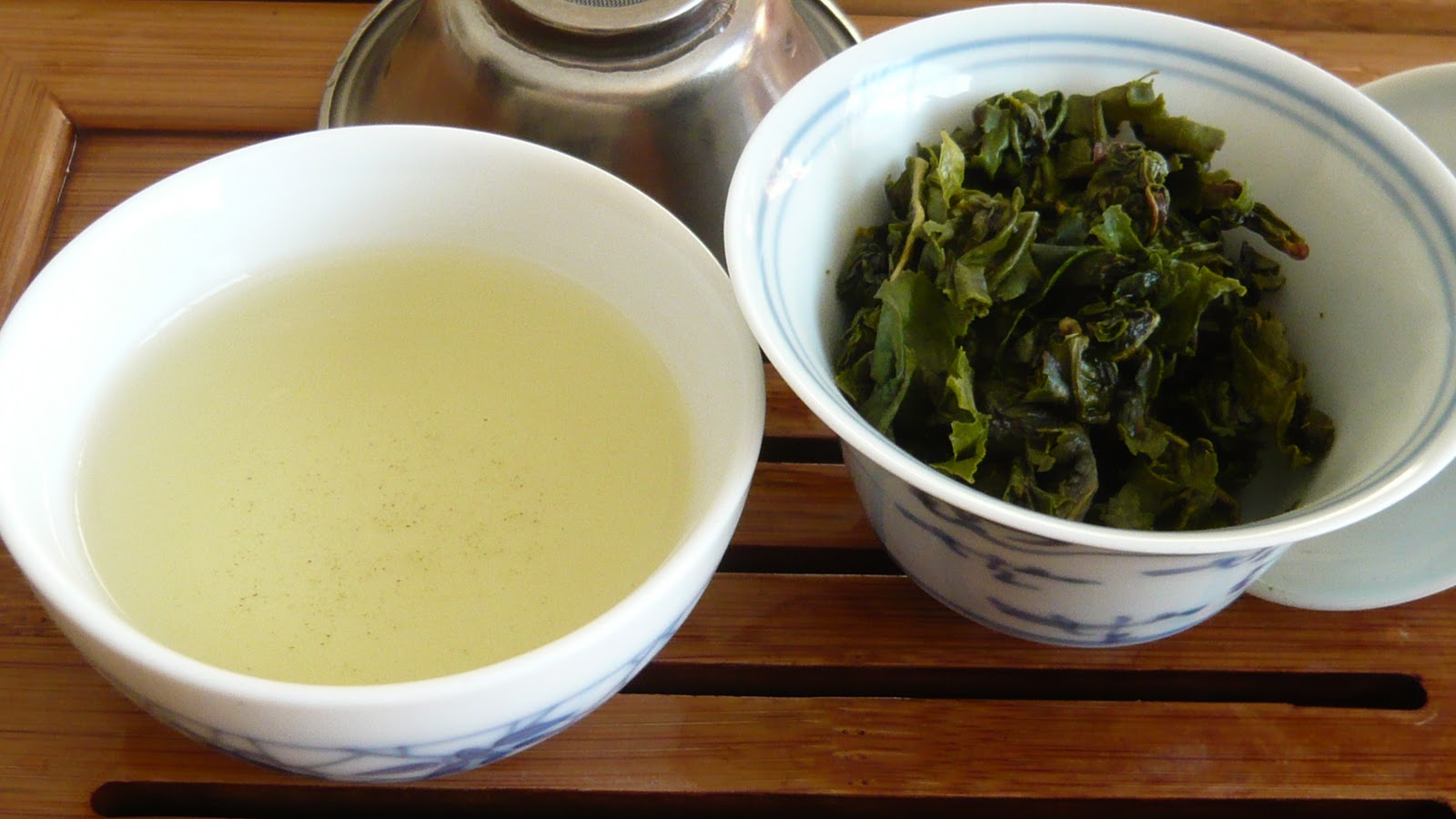
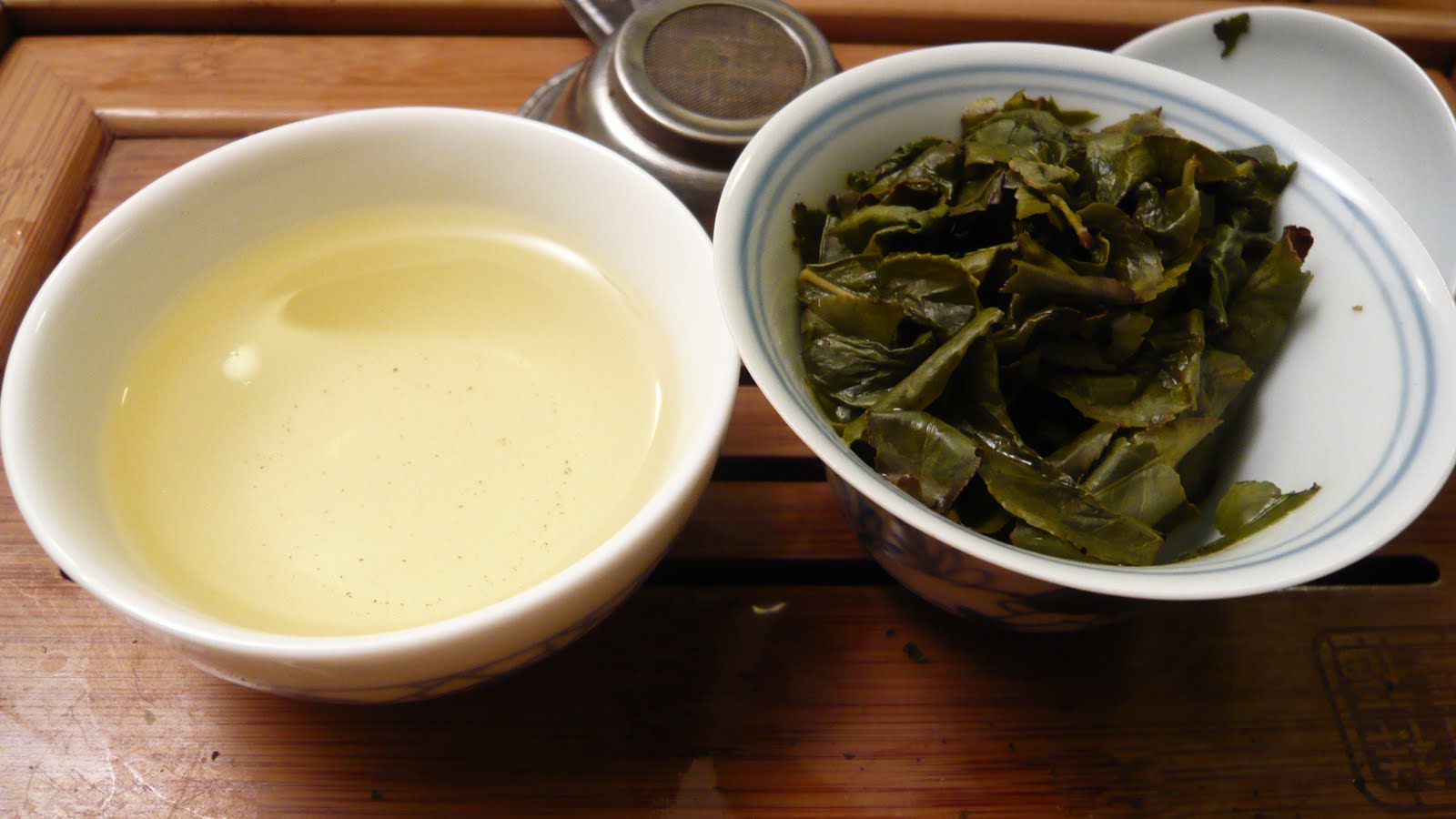
I brewed this tea in both gongfu style and with a small tea bowl. The tea does have some honey and fruit aroma similar to Oriental Beauty, but not as prominent as the aroma of OB. I think an obviously feature of this GABA tea is, it tastes very smooth and sugary - a strong sugar taste minus the sweet part. It may fit the tastes of people who love Oriental Beauty, Muzha Tie Guan Yin and/or black tea, although its flavor is not exactly the same as any of them. In later infusions of gongfu style, this tea yield some taste of herbal medicine. Overall, the front taste of this tea is rich, but aftertaste is weak or none. The tea does well in tea bowl or mug brewing. When using a mug, 10-15 dry tea grains can make a good mug of tea with about 3 infusions. Compared with most other oolongs, the tea releases flavor faster, therefore less tea can be used for each session. On the other hand, in mug brewing, the tea gets weak at about the fourth infusion, not as long lasting as many other oolongs.

I am not sure yet if I am fond of the concept of promoting specific healthy content in tea. But it's an interesting phenomenon to observe. Besides the GABA concept in this tea, something else about this tea that attracts me is, the producer tried all means (including adjusting ingredient of organic fertilizers and modifying the procedure within GABA standards) to make the tea tasty. I don't think it's as tasty as my favorite Oriental Beauty, but it does have some good taste. I don't want to drink a tea solely for its health benefits, and I am glad the producer thinks the same way!