Apr 19, 2010

Semi-wild pre-Qingming Huang Shan Mao Feng

Huang Shan Mao Feng is probably my favorite green tea. It tastes like high mountain mist, last for more infusions than most Chinese green teas, and it has the most handsome leaves!

This year, the first Huang Shan Mao Feng I've got is a very unique one. It's made with semi-wild tea leaves. These tea bushes were planted in the planned-economy era of China. Then in 1990s, with urbanization and development of (what I would call) capitalism, more and more farmers went to metropolitan China to work in large factories or as janitors, sanitation workers, waiters and in various other urban, low-income professions. Therefore, these tea bushes were abandoned for over ten years. They started to mingle with other wild trees and bushes. Then, in recent years, the fields were bought up by a small tea factory in Huang Shan (Yellow Mountain), and they started to take care of the tea bushes. Their way of taking care is merely manual management to maintain the shape of the tea bushes. There isn't much more that can be done. The fields are very much isolated from the outside world. The only road leading to the tea fields is barely 6 feet in width. The slopes are extremely steep, perfect for growth of tea but not for "modern" agriculture. There isn't any pesticide or artificially synthesized fertilizer applied to the tea bushes. Although the product is not certified organic, it is organic tea in real sense.

After a few experimenting years, this is the first year relatively large amount of teas is produced in these fields - roughly 15 lb. produced from the first harvest, and some more to come from later harvests in early and mid-April.

Here is a photo the tea factory sent to me about their semi-wild tea fields. It's my type of small heaven!


The ultimate evaluation of a tea is based on its flavor. In my opinion, the greatest difference between semi-wild tea and regular tea is richer flavor. For green tea, early spring is the best season (and the only season for many products). The earlier the harvest, the more refreshing flavor a tea has. Then in later harvests, flavor becomes heavier, but meantime, some bitter, astringent side tastes may build up too. The semi-wild tea has the pure taste of early spring, but it has richer flavor than other teas harvested at the same time.

Natural beauty of the dry leaves.


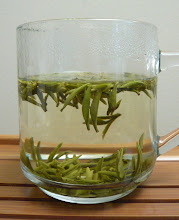
I always use a glass to brew Huang Shan Mao Feng. Can't miss the view of tea dance!


I love it when the leaves all "stand up" in the water like many little trees.


When most leaves sink to the bottom, the tea is ready for drinking. If you gently blow the water surface, you can "drive" away the suspending leaves. Many people would prefer using a gaiwan, to avoid any fight with the leaves. When using a gaiwan, I believe it's a good idea to leave the lid OFF most of the time.

I think I've got to get a glass gaiwan for green teas!


The tea has a light green bean / edema-me aroma. The first infusion doesn't feel as strong as some other teas. But the first 3-4 infusions are very consistent in flavor, and the refreshing aroma doesn't get weaker. As a thrifty-minded person, I re-infused this tea for many times. To other tea drinkers, I would recommend at least 5 infusions. This tea lasts more infusions than most other green teas I've seen.

To me, this is the most exciting time of Spring!


Semi-wild tea bushes/trees are rare, but are found in various tea production regions (such as Anhui, Fujian and Yunnan). Some of them will become completely wild and dissolve in the background of wild woods. Some of them may be reclaimed by tea farmers. I believe, what this small tea factory in Huang Shan has done, managing them at a natural level, is a best way to treat these semi-wild tea bushes.

The most celestial taste of tea often comes with some heavy topics. Drinking this tea, I can't help pondering on the tea agriculture and tea "industry", and all the impacts it receives from social changes.

Why were the tea field abandoned in 1990s? Obviously, tea farmers could earn more money as janitors and waiters in a large city! Today, the redemption of abandoned tea fields is a good sign. The tea is valued much more than it was in 1990s. But even up till today, tea farmers in Northern China generally make much less money than tea farmers of the "most famous" teas such as Xi Hu Long Jing, Tie Guan Yin and Wuyi Yan Cha. In Yellow Mountain regions, many doing-well farmers are organized by their villages or local factories. But many other tea farmers don't enjoy such organizations and constantly struggle between low sale price and what tea quality they can afford to produce.

In recent years, human labor becomes more and more expensive in China. A sign of this is many urban manufacturers of cheap products have gone bankruptcy, and more and more farmers go back to their home villages as rural income started to get higher than the low salary they can earn from the cities. I hope this means more tea fields will be used to produce higher quality teas, and the market rewards farmers better.

Apr 17, 2010

Discussions on organic cultivation of tea (1)

To tea drinkers, the safety standards of tea leaves is always important. From time to time, concerns are raised about these standards (such as pesticide use, heavy metal residues...). But there are not many systematic studies on these issues. Sometimes, media reports are even influenced by myths and paranoia.

Tea is an agricultural products. However it's unique in many ways. In most tea producing regions, regulation on pesticide use for tea is much stricter than the regulations for other agricultural products such as crops, fruits and vegetable. Besides, the processing of many tea products (especially when high temperature is applied) largely helps purify the products. Therefore, most studies on safety standards of agricultural products don't provide good information about tea products.

Here are mainly excerpts of conversations between some Chinese tea professionals/tea farmers and tea consumers (drinkers, vendors...). They are not objective studies. But I believe they can reflect at least some of the truths, as well as breaking some myths. The discussions are about organic cultivation in broad sense, not just restricted to official organic certification. I started these inquiries and collected these conversations mainly to satisfy my own curiosity on this issue, and the conversations happened randomly here and there. Besides, this is a complicated issue and I am a poor writer. To make it easier for me to write and probably easier for people to read, I would just put the contents in bullet points. (Lighter-colored texts are my additional comments.)

1. Q: Is heavy metal residue a major concern in tea? (this turns out to be a relatively uncomplicated issue...)
    A (from a Tie Guan Yin manufacturer): In the past, some tea products were found to have high heavy metal residue. All of these products are from plantations next to roads with relatively high traffic, and the heavy metal of concern is mainly lead. Tea products from road side plantations are the bottom quality teas and probably you've never had any. (I guess I've never had any and most viewers of this blog have never had any tea of that low quality. But from the view of the entire "tea industry", it's still worth thinking where those low quality teas go. My guess is for extraction of tea ingredients and for making cheap type of teabags. But it's just my guess.) High quality tea is always cultivated in well-managed plantations, away from contamination, and most of the times, up in the mountains (this is often true for not just Tie Guan Yin, but tea of other genres too) where few mobiles or none could reach.

2. Q: How much pesticide is used on tea? (Here included are some answers I've got. Answers from other people about different tea types are quite consistent with them.)
    A: (from a Tie Guan Yin manufacturer) There is no need to apply pesticide during the winter and before spring harvest, because the bugs are not out yet by the time. In summer, pesticide is used, but only the minimum amount necessary. Currently all pesticides allowed to be used on tea are pyrethroid pesticides, which have the fastest degradation rate among all pesticides. The pesticide is degraded in 3 days, and tea is only allowed to be harvested at least 10 days after pesticide application.
   A: (from a Tie Guan Yin farmer) In Fujian province, even when pesticide is applied, most of the time it's not directly applied on tea bushes, but applied to floral, non-tea bushes planted next to tea bushes. The floral, non-tea bushes can attract a lot of the insects in tea plantation, and therefore pesticides applied to them will reach most bugs. This is an interesting idea, and probably partially explains why tea plantations are often seen with floral bushes and trees planted near tea bushes. Later, I did see a few photos demonstrating what he said. For example, this man is applying pesticide on grasses in a tea plantation. This is a corner of a tea field, and tea bushes are several meters behind him.
http://teabbs.zjol.com.cn/attachments/month_0806/20080613_d86bc54be36442fb4773siPQVYbbS5IH.jpg


  A: (from a Huang Shan Mao Feng green tea manufacture) There is no need to apply pesticide during the winter and before spring harvest, because the temperature is still low and there are barely bugs by the time. We make Huang Shan Mao Feng only in early spring, and the harvest of the entire year ends around April 20. There aren't many bugs in such high mountain before May. (This is the one who provided the wonderful semi-wild Huang Shan Mao Feng to us.)

  A: (from a government employee of Fujian) Pesticides regulation is much stricter on tea than on other agricultural products. For example, Kelthane was banned in 2002 all over China for tea. It was banned even earlier in Anxi County of Fujian. However, Kelthane is still widely used for fruits and vegetables. And Kelthane is widely used in developed nations including US and Canada, for fruits such as apples, peaches and grapes. I did some internet search on Kelthane. Kelthane leaves relatively higher DDT residue than most other legal pesticides. But since it's still allowed in developed nations, I assume all these countries believe the pesticide residue can be minimized through guidelines and regulations. Another example of pesticide not allowed for tea but allowed for other agricultural products is Methamidophos. It was banned on tea, vegetables and fruits in 2001 throughout China (most other countries in the world banned it for fruits and vegetables too). But it is being used for crops in many countries in the world, including developed nations such as US and Canada. In terms of the concerns of Kelthane, Methamidophos and some other highly dangerous pesticide, tea products are much safer than fruits, vegetables and crops.

  A: (this opinion has been expressed by several oolong people who work on Tie Guan Yin, Yan Cha and Taiwan oolongs) Besides the strictly controlled application amount, the high temperature processing of tea leaves, as well as sitting time will further cause degradation of any pesticide residues. We usually drink a tea many days after the harvest of tea leaves. The fruits and vegetables we eat are not treated with such harsh procedures, and they can't sit around for many days before we eat them. In this sense, tea is much safer than fruits and vegetables. (That being said, fruits and vegetables, especially those produced in developed nations, are generally safe too, because the amount of pesticides and periods of application are strictly regulated. These people's point is, tea is no less safe than many other food products, which I agree.)

3. Q: How can the government enforce these regulations on pesticide? As far as I know, large companies will submit samples and pass government inspection, but most farmers won't do the same. (In upscale tea market, most tea is from farmers and small factories rather than large companies. Large companies have very high quality tea, but there aren't many large tea companies in China and none of them dominate the market.)
   A: (from a Tie Guan Yin manufacturer) Nowadays many smaller factories like ours would obtain government inspection certification, because consumers are more and more concerned of safety of agricultural products. As far as I know, most farmers will not go through government inspection, because it's costly and unnecessary for the family size small production. But all the farmers I know of are extremely careful about using pesticide. They would minimize the amount because overuse doesn't promote the quality of the tea. Farmers sell tea leaves to factories. Factories that failed to pass inspection will be shut down, and farmers who sell bad tea leaves will have trouble selling their tea in future years.

  A: (from a Tie Guan Yin farmer) You've got to see what one has to do to spray pesticide. It's not an easy job. One has to carry a huge tank on his back, walking up and down the slopes of many acres under the summer sun. Who would like to do it frequently? Some media reporters wrote about tea farmers using pesticide. But if any of them had seen a tea field and tried to carry a pesticide tank, they wouldn't have imaged that we used large amount of pesticide. (It's true that summer in Fujian is scorching and Tie Guan Yin plantations, as well as many other tea plantations, are very hilly, sometimes even hard for one to hike without anything carried.) 


  A: (from another Tie Guan Yin manufacturer) Farmers would work out their best to minimize pesticide use, not only because of the regulations, but also because it's costly both in money and in human labor. Most ranches and vegetable fields are flat and can be even installed with automatic spray system. But the natural conditions of tea field doesn't allow such mechanic device at all.

  A: (from a Long Jing green tea farmer) To many people, market demands are even more effective than government regulation. Families in my village can easily sell high quality spring new tea for 1500 yuan per jin (This is like $200 per lb. The price quoted is when they sell tea to large company buyers and is much lower than the final market price) and to us, all the focus is on the quality of tea. We can even afford hiring workers to manually remove bugs and weeds. But we can't afford risking our quality and reputation.

Apr 16, 2010

Making tea grapefruit step by step

Here is a post about my first attempt of making tea grapefruits, and some background of this special tea that was once homemade in many families in South China.

Here is a post about the first tasting of a grapefruit aged tea.

People asked me how to make them. Actually it's very easy, since I am a very clumsy person and can't really do any complicated hand crafting :-p

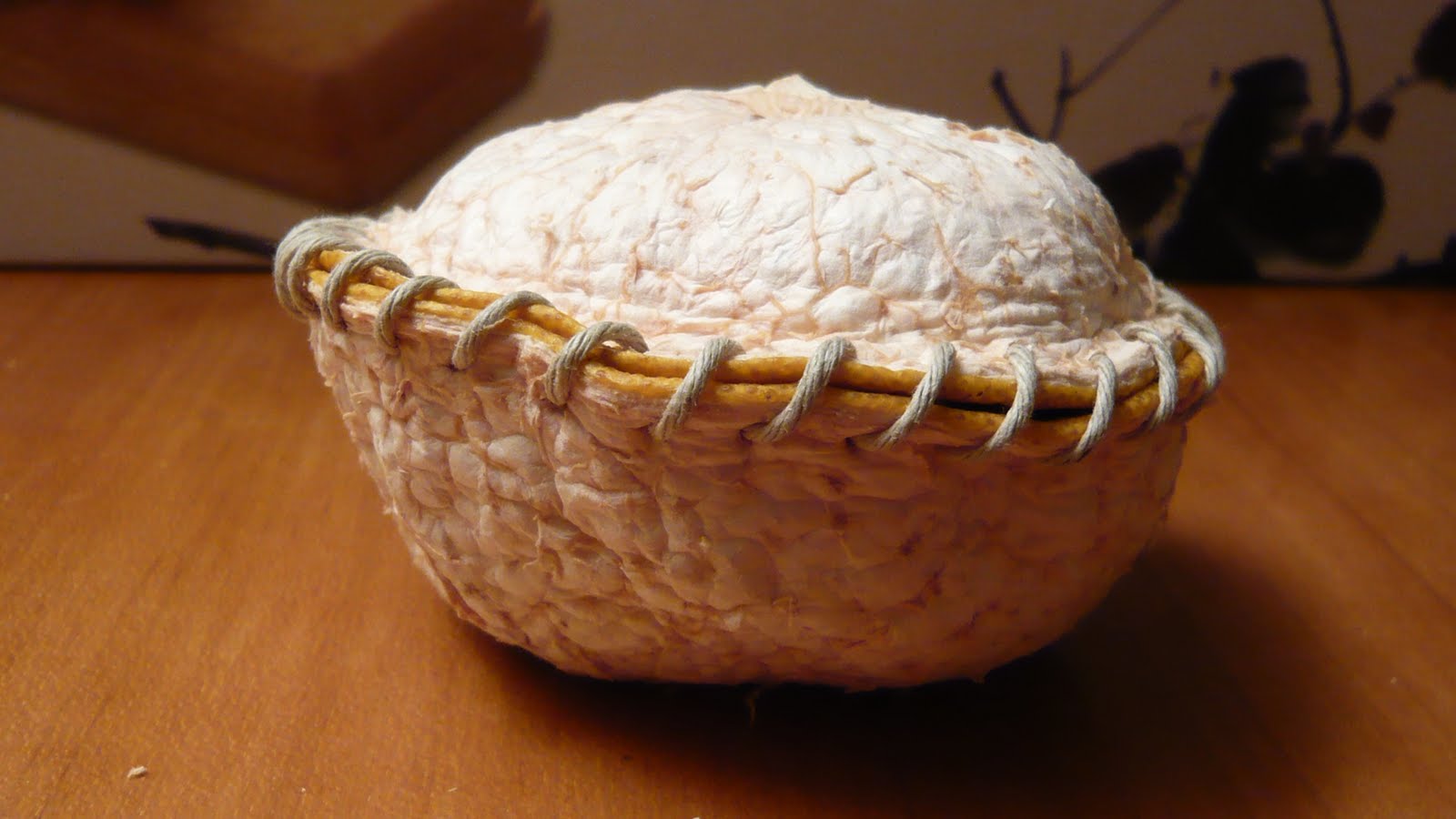
I took some photos along the way, not very systematically though. Some of the photos are about making tea grapefruits and some are about making tea pomelo. Traditionally in China and Southeastern Asia, pomelo, tangerine and some other local citrus fruits were used. But in New England, grapefruits are the easiest to find and to handle (it's almost impossible to turn inside out an orange or tangerine skin without damaging it), and one can always get organic grapefruits from local market (The outside of skin will have direct contact with tea, so organic is the better choice. Obviously this was not a concern in traditional society, but a big concern nowadays!). Pomelo is nice for this purpose, but it's harder to get, and I didn't find any certified organic ones. Besides, the size of grapefruit is very convenient. Especially when I wasn't 100% sure what I was doing and was still experimenting on different teas to use, it was good to make smaller tea citruses with grapefruits, instead of larger ones with the big pomeloes. But the following pictures include both grapefruit and pomelo.

Step 1 - Carefully cut the fruit skin in two sections (preferably a bigger section and a smaller section). Don't penetrate the white inner lining of the fruit and force out any juice. Then, carefully peel off the two sections. This takes some exercises, but it can be a fun game after dinner :-D

This is a pomelo.


Step 2 - Don't turn the skin inside out immediately. Leave the two sections on counter top, and let them get half way dry (depending on how dry the room is. In our heated room in winter, it took about a few hours). Inspect them from time to time. If you attempt to turn them over too early or too late, they can be easily broken.

This is a pomelo. For pomelo, during Step 1-2, you need to constantly peel off the white inner lining, so that the final fruit skin won't be too thick.


This is a grapefruit:


Step 3 - After the fruit skin is turned over, let it further dry. For my grapefruits, it took about 8-16 hours. And it takes much longer for pomelo. Check them out constantly to monitor how dry they are. If the fruit skin gets too dry, the shape of the final work will be ugly, besides, it may become to dry to let your needle go through when you sew them up. If the fruit skin is not dry enough, it will take very long for the final work to thoroughly dry out, and there is the risk of gaining molds if the fruit is left too humid. But in New England, with heater on in winter, it never gets too humid. So later I discovered that I would rather start Step 4 earlier than later.


Step 4 - When the fruit skin is ready, sew on the rims of the two sections to attach them. When they are half way attached, stuff in the tea. (I've explained in my earlier posts why I chose puerh and Taiwan Wuyi.) Then finish sewing. Try to stuff in as much tea as possible so that the fruit will be maintained in a nice shape later. I used hemp thread. It's tough, nice and natural.

My first tea grapefruit is ugly:


Later I started to make better looking ones :-D


This is a pomelo!


It takes much longer time for a pomelo to thoroughly dry out. I put it on a colander so that it can dry evenly all over.


Finally I wrapped them up with napkin tissue. I've ordered some traditional puerh wrapping cotton paper and would like to use it in the future!

Then I put them in brown paper bags and stored them in a dry corner of my bedroom. I haven't decided it yet whether to put them in some air tight container later. If put in an air tight container, probably they won't need any other treatment in future years. Otherwise, I may need to pan roast them or oven bake them to remove any moisture. Or probably just lay them out in the heated room in winter. My room in winter is so dry that I believe it's very safe for these tea grapefruits.


Apr 15, 2010

The real spirit of Boston Tea Party

People talk about Tea Party more and more. Tea Party... Tax...

I guess, for tea drinkers and non-drinkers, Tea Party could mean enirely differnt things.

Here is my view of Tea Part as a tea drinker.

Tea Party is not about dumping tea, but about drinking good tea from a fair market. Boston Tea Party protested, rejected and destroyed tea from British East India Company. But the partisons didn't stop drinking tea. Throughout the time, people fought for drinking Bohea (which is Hokinese pronunciation for Wuyi tea), which was a "smuggled" tea under the British colonists' law. It's not about choosing oolong over black tea, but about choosing a tea with consumers' free will and with fair market price. 

Today, tea market in America is a free market. But, selecting tea of high quality and fair prices are important issues. Consumers can influence the market and improve the entire tea trade by refusing to be settled with low quality or unfair prices.

And, of course, Boston Tea Party demonstrated how tea can change the world. Tea is part of the history of Independence of America,  just as it started and terminated many wars in Chinese history.

Apr 13, 2010

Brewing Long Jing (dragonwell)

It was a pleasant job packing the pre-ordered tea into parcels to send to people. Just handling the new spring green tea already made me feel caffeinated!

I tried to put together a short "brewing instruction" to include in the package. But still I am not sure if it's an ok instruction. Giving brewing instruction is always complicated and something I always hesitate to do. By doing it, you are instructing people to use an exact amount of leaves, exact volume of water, exact temperature and exact infusion time (although most of my brewing "instructions" lack the exact numbers for these parameters). But how is it possible for all the people to do exactly the same thing? And usually in tea brewing, simultaneous deviation from a few parameters result in smaller disaster than missing just one parameter, whether it's temperature, leaf amount or infusion time.

Chinese green teas are relatively easier to deal with. So I dare to send this to all the people. But still this is only one of the many ways to brew it, and in my eyes, one of the easiest way.


Vessel: A small cup, glass, or liquor glass (about 8 oz.). A mug (about 10 oz.) is good too. (I love glass mugs!)

Water temperature: 185 F to 195 F. Don’t use newly boiled water or water temperature lower than 175 F. To get a suitable temperature, you may bring water to boiling and then let it sit in kettle for 5 minutes. (This method actually minimizes the chance of leaves being scorched even if water temperature is a bit high.)

Brewing:
1.   Pour water to fill about ¼ of the cup (or glass/mug)
2.  Throw tea leaves to let them just cover the surface of water (Maybe a little more. I have relatively light taste on green tea. Many people would add more tea leaves than what I do.)


3.   Gently swirl the cup for 15-30 seconds, to allow leaves get wet on both sides. (Sometimes unnecessary, but it won't hurt.)
4.   Pour in more hot water to fill about ¾ of the cup’s total volume. (It doesn't really matter if you fill the cup to more than 3/4 volume. But I think it looks NICE not having the cup filled all the way to the top.)


5.   Wait for leaves to sink. Start drinking after 1.5 to 3 minutes, when most leaves sink to the bottom of the cup. (If leaves don’t sink, it’s probably due to low water temperature. Wave them away with a fork for the first infusion, and then use hotter water for the second infusion). (I personally don't mind start drinking when there are a few leaves still floating around. If taking smaller sips, usually you won't be eating leaves.)


6.   Drink till there is ¼ to 1/3 cup of liquor, and then pour in more hot water for the next infusion. Repeat to infuse the tea for a few more times. (Because of the leaves, it will be hard to drink all the way to the bottom anyway.)


The above is Da Fo Long Jing, Long Jing cultivar #43. Below is Shi Feng Long Jing (Weng Jia Shan), Long Jing Jiu Keng Group cultivar. 

I have to admit, I am often shamed of myself for messing around with both the photos and the webpages. I don't know how to get them right...


Apr 12, 2010

First tasting of my Home-made tea grapefruit!

A lot of things to do. But I've got to write this down when I can still recall all the details!

So, I made some tea grapefruits in the past December and January. Here is a post about them! I am a super clumsy person, so I was really excited that I can MAKE something.

Although these are supposed to be aged for years, I thought I should open some and monitor the change of tea from time to time. So here is the first tasting that I did yesterday.

Before I receive my hand-made organic cotton paper from Yunnan, I would use regular napkin tissue paper to wrap them.


This is one of the first ones I made last December, when I was still struggling with sewing. I picked a relatively ugly one to open first. Most of those made later were slightly prettier. The label means 2009, December 2. So far I tried 3 types of tea. "B" is what I used the most. It's a 2006 Taiwan Wuyi. It's a relatively inexpensive tea, and currently I can get as much as I want. Besides, I've found it to be very mellow and its flavor mixes well with herbal drinks. So I thought probably it would be suitable for tea grapefruits. 


Traditionally the tea citrus is made with puerh (in Guangdong and Yunnan) or oolong (especially Fo Shou Oolong in Fujian and Southeastern Asia). But so far I don't like shu puerh as much as most other teas, and I feel good sheng puerh could be a bit expensive to fill grapefruits - even for cheap Xia Guan tuo, you know, its future is EXPENSIVE!) So my current choice is this Taiwan Wuyi. I would like to try more teas when I feel more sure with this.


It smells good! Chinese like aging orange and tangerine peels. The aged peels are used in cooking and as herbal medicine. From outside, the tea grapefruit smells pretty much like aged peels.

When put side by side, the tea from the grapefruit (on the left) looks the same as regular Taiwan Wuyi. But it smells of slight aged peel aroma.


Same amount of tea in two same gaiwan (but I forgot to take photos of the gainwans). I guess this is 3-4 grams of tea in a 100ml gaiwan. After an instant warm-up rinse with boiling water, I made the first infusion as what I usually do with most oolong, Interestingly, the tea from grapefruit (on the left) yield slightly darker liquor. The two teas are same tea of the same age. But possibly the one was oxidized more with the moisture (and maybe biochemical contents as well?) in the grapefruit. The tastes of the two cups were very different. The tea from grapefruit tasted a lot brighter and complex, while the regular Taiwan Wuyi tasted darker and mellower. 

Throughout the entire time, the smells of wet tea and gaiwan lids were very different. The regular tea smelt more regular, but the grapefruit aged tea smelt of some light citrus notes.


For the second infusion, I let both teas infused for 1 minute, so that any differences would be more enlarged. This time, the grapefruit peel flavor in the tea on the left is more prominent. At one moment, I thought the bright fruity flavor was really nice. But at another moment, I thought the grapefruit peel flavor was still too "raw", with some astringency in it. 

When making aged peels, the citrus peels used should be aged for at least three years to let all "raw" taste in the peel convert to a woody, deep aroma. In modern Chinese food industry, when they make "aged peel" snacks, although there is no 3-year aging, they would boil the peels and infuse them with syrup or honey to remove the rawness. If you bite on an orange peel, you will know what I mean. Raw orange peel, although tastes fresh, bears some astringency and spiciness that are not so pleasant. When the tea was aged in the grapefruit, it didn't get too much of the astringency, but still, I think more time is needed to let the peel's flavor convert to be more "ripe". Overall, I am glad that the flavor seems all "logic" to me and it's developing in the right direction!


For the third infusion, I let both teas infused for 3 minutes. This time, both teas tasted even stronger. Still, the regular Taiwan Wuyi tasted very mellow, with sugary mouth feeling typical of Taiwan roasted oolong. The grapefruit aged tea seemed to be sending a lot of different flavor signals to the tongue. I had difficulty to describe what flavors it exactly had. For some reason, the complicated flavor made me believe this tea is very healthy (I don't know why, but probably to me, slight bitterness, astringency and overall orange peel flavor all indicate healthiness).  By this time, my husband (who is generally not a tea drinker) came over and I let him taste the two teas. His response was, the grapefruit aged tea was a little astringent but tasted more interesting, with some floral notes (however I don't think his floral notes are the typical Taiwan high mountain oolong's floral notes). 


Overall, a problem I've found about tasting two teas side by side is, I can't be sure how much time to leave between sips from the two different cups. On one hand, I thought they should be tasted one immediately next to the other, and that's all the purpose of tasting two teas side by side. On the other hand, many teas have great aftertaste and mouth feeling, which sometimes last many minutes (even hours when it comes to some sheng puerh) after each sip. This Taiwan Wuyi doesn't have as complicated layers of flavors as some other oolongs, but it has great aftertaste. It usually leaves the mouth and tongue feel sweet and cool. Now when I tasted the two Taiwan Wuyi together, there was no way for me to determine what kind of lingering aroma was from which tea. 

The opened grapefruit was tied up, and the tea will be tasted again after the summer. I can't decide yet wether to send some to my mother now or laster when it's more aged. But I somewhat feel she will like this tea!

Apr 11, 2010

a great charcoal roast Tie Guan Yin

Personally I think this is the best 2009 charcoal roast Tie Guan Yin I've tasted. It's made by a group of tea professionals who have been working hard for years to revive the traditional Tie Guan Yin. Due to the change of tea tree materials in recent decades, they are not there yet. But they are closer and closer to the goal.

A relevant question is, is it worth it paying all these efforts to make traditional Tie Guan Yin? Obviously the market doesn't favor it. In Chinese market, modern green style dominates the Tie Guan Yin market. Most so called roasted Tie Guan Yin products are left over tea from previous years, not carefully roasted, not with charcoal. Even traditional green style Tie Guan Yin (featured with warmer fragrance and fruity aroma) is not as much favored as modern green style.


First infusion:


Seventh infusion:


Spent leaves:


Anecdotally it is observed that many seasoned Tie Guan Yin drinkers tend to more and more prefer traditional style and charcoal roast tea. But these are just a small group of tea drinker, compared with the entire market. Some teas, including traditional Tie Guan Yin and other products, are appreciated more by tea professionals and seasoned tea drinkers, rather than by the entire tea drinker population. These teas are often called "Shi Fu Tea" (Shi Fu 師傅 meaning a skillful tea worker). I don't know how the market will finally respond to such "Shi Fu Tea". But I like traditional Tie Guan Yin very much and have found it more mellow to the stomach than modern style. So I hope these people keep their good work going!

(Small scale wholesale of this tea is available while supplies last.)

Apr 10, 2010

Chinese news reports about Starbucks selling tea in China

My father showed me a series of news reports from China about Starbucks starting to sell tea in China. I thought they are interesting to share. These interviews are from TV and newspapers. Since I can't memorize exact words, I paraphrase most of them. Light colored texts are my comments.

Interview with a Starbucks manager -

Reporter: What makes Starbucks start selling tea?
Manager: (talking about market, culture, bla bla bla...) In major cities of China, Starbucks is still the largest coffee chain store, but there is more and more competition from European and Southeastern Asian coffee chain stores. 
Manager: Some of our customers enjoy our cafe environment more than enjoying coffee (that's funny and true). Therefore including more Chinese elements in our products attract more consumers.

Reporter: How confident are you about Starbucks selling tea to Chinese?
Manager: Well, I am more cautious about selling tea than selling coffee. Most Chinese are not picky about coffee (That's very true, and it's funny that Starbucks coffee still sells well in China for about $3.7 per cup, which is the price of a decent restaurant meal in China.) but people are surely pickier about tea. So far sales records are excellent. Currently tea is 15%-20% of our sales. (I am impressed by the power of Starbucks! Starbucks tea is about $2.8 - $3.4 per small cup, still price of a decent restaurant meal in China! I am impressed that Chinese are still willing to pay this price for Starbucks tea while they can get tea all over the city in much lower prices.)


Interview with consumers -


Reporter: What's your comment about Starbucks selling tea?
Consumer 1: It's nice that Starbucks tries to include Chinese elements. That's a good thing! Well, it's good, as long as they don't get too Chinese. (I guess he made a point. Who would pay for $3.4 a cup if it's totally Chinese AND it's in China!)


Consumer 2: I guess it will attract some older people to Starbucks. I am not interested. Starbucks coffee sounds cool. Starbucks tea sounds odd. (I read this from paper, but guess it must be a young guy.)

Consumer 3: I am sure the tea they sell is foreigners' tea. Nothing like what I would drink daily. Why would one go to Starbucks for tea? (This one sounds like my mother. She always call teabags "tea for foreigners". Although I haven't tasted it, and may not want to spend $3 to taste it, I do think the starbucks tea looks and sounds better than teabags.)

Consumer 4: In my opinion, what you drink in a cafe is not important. What's important to me is the relaxing environment of a cafe. (In China, most cafe chain stores like Starbucks are expensive and considered "decent".) Then of course it's great when there are more choices and tea options. (I believe what he says represents opinions of many business consumers. In China, many business conversations carry out in restaurants and cafes like Starbucks. Going to Starbucks is an expenditure standard for some businessmen. Then for those who don't really enjoy coffee, tea options are good news.)


Interview with teahouse owner -

Reporter: Will Starbucks selling tea cause impacts on business of local teahouses? (To be honest, when I lived in Beijing, I never really cared about "local teahouses". Most of them are simply too expensive for ordinary people. A pot of tea often costs you many decent restaurant meals.)


Teahouse owner: I believe it's good influence. Young people like Starbucks more than traditional teahouses. If Starbucks gets more young people interested in tea, it's good news to all of us. After all, when people know more about tea, they will seek for more tea and tea of higher quality. Then they can possibly become our customers. (That's a good point. Or people buy loose leaf tea and make tea at home.)

Apr 5, 2010

Easter, Passover and Qing Ming

I always believe, festivals in human societies are directly related to natural phenomena. No matter what religion or culture background a society has, the holidays and festivals are not independent from its natural environment.

For example, Easter and Passover, in my eyes, are very similar to Qing Ming in Asian societies, although Easter and Passover came from religion history while Qing Ming is largely rooted in agriculture history. They have totally different stories for their origins. But all of them, to certain degree, are about respecting the deceased and acknowledging life from death. And early spring is just so right for both of them. Qing Ming is always April 4th or 5th on western calendar. Easter and Passover may be a little earlier or later, and this year Qing Ming is right on Easter Monday.

Qing Ming, in Chinese, means clear and bright, or to be more specific, Tian (heavens) Qing (clear) Di (earth) Ming (bright) - The heavens are clear and the Earth is bright. Exactly how it feels at this time of the year. In most of Chinese climate belts, there is often shower or drizzling on or around the day of Qing Ming. After that, Spring comes with a lot of sunshine. Climate in North America is quite different from that in China. But still, in New England, April showers bring May flowers!

A list of Chinese festivals on western calendar is here.

In my opinion, other connections between holidays across cultures include:

Christmas -- Winter Solstice (To me, this is the most hopeful time of a year, when you know day time starts to get longer!)

Thanksgiving -- Moon Festival (not exactly the same time period, but the idea is, people need a festival after autumn harvest!)

In Tea Calendar, it's not coincidence that most early spring teas are green, white or yellow teas. As we know, all tea varieties are made with leaves from different cultivar of the same species. The light or none oxidation tea varieties have flavors most people yearn for in this season. Besides, according to traditional Chinese medical theories, Spring is the season of waking up, growth, activities and rising of warmth. Light oxidation teas have the most de-oxidants and relatively higher caffein contents (this is based on view of most Chinese tea professionals and may not be consistent with results of chemical analysis of all tea products), which yield energizing power. Meantime, these teas are what people believe to cool down and balance the "inner fire" in one's body.

Apr 4, 2010

2010 Shincha News (5) - April Madness

Shincha news (4) is here:
http://gingkobay.blogspot.com/2010/03/2010-shincha-news-4.html

Crazy tea drinkers order $400-per-500g pre-QingMing (harvested before April 5) Shi Feng Long Jing as if it were free. Year after year, the fever never cools down. I am staying up till 2am ordering Shi Feng Long Jing for a group of American tea drinkers, because no one knows if it will be out of stock tomorrow.

The pre-QingMing Shi Feng Long Jing will not be out of stock in Gong Brand, a brand-name Long Jing company that sells it for about $1000-per-500g. It will not be out of stock in Wu Yu Tai, Ten Fu, or Zhang Yi Yuan, reputable tea houses that sell it for over $800-per-500g. Compared with these price tags, $400 sounds like a good deal. It's just slightly higher than the price a big tea company would pay to buy tea from farmers. Personally I think $400 is still a lot of money to pay for 500 grams of tea, but it's somewhat understandable why people are buying like there is no tomorrow.

If you don't plan to join the luxurious craziness of Hang Zhou Long Jing (Shi Feng, Meijiawu, and West Lake), then remember there is still other Zhejiang Long Jing (harvested about the same time), there is still Huang Shan Mao Feng (high mountain harvest started last week and large scale harvest will start in the next a few days) and numerous other green teas.

Due to the early March cold current, Tai Ping Hou Kui's harvest is predicted to be around April 20, which is said to be "a week later than the past years". (To my knowledge, traditionally Tai Ping Hou Kui's standard harvest time used to be April 20. But from who knows what year, it became earlier than April 15!)

Xin Yang Mao Jian's harvest started from yesterday, April 3 in China. Xin Yang Mao Jian suffered a lot more than Long Jing and most Fujian oolong (except for Feng Huang Dan Cong which suffered the most) from the early March snow and frost. The price will increase a lot. However, because it's not a current "hotspot" tea varietal, price will not likely increase to the extent to cover tea farmers' economic loss.

Tie Guan Yin and Ben Shan are slightly affected by the March cold weather, and their harvest will be slightly postponed to after May 10. But there is always oolong from last autumn!

Huang Jin Gui (golden osmanthus) is an early harvest cultivar, compared with most other Fujian oolong. Its growth and harvest has been dramatically impacted by the early March snow and frost this year. Personally I've given up spring Huang Jin Gui of this year. But the tea from last autumn is pretty good. Besides, I've stocked up some Huang Jin Gui from the past winter season, which many people believe is the best season of a year for Huang Jin Gui.